Imagine turning on your kitchen tap and unknowingly drinking water that has mixed with garden fertiliser, industrial chemicals or waste from a neighbouring property. It sounds unlikely, but without proper backflow testing and prevention, it is a genuine possibility. For Hills District homeowners and businesses, backflow testing is one of those plumbing requirements most people never think about until something goes wrong, and by then the consequences can be serious.
What is backflow, and how does it happen?
Backflow happens when water flows in the wrong direction through a plumbing system. Under normal conditions, water enters your property under pressure from the mains supply and flows forward to your taps, appliances and fixtures. When that pressure drops suddenly, such as during a burst main, a surge in demand or fire fighting activity nearby, water can reverse direction and flow back into the public supply.
When it does, it can carry with it whatever has been sitting in your pipes or connected to them. That might include pesticides from an irrigation system, cleaning chemicals from a commercial kitchen, bacteria from a pool or spa or waste from a plumbing fault. According to Sydney Water, cross connections between clean and potentially contaminated water sources are a known risk, and backflow prevention devices exist specifically to stop this from occurring.
Why is it a risk in the Hills District?
Because of the mix of properties here. Properties across the Hills District range from residential homes with rainwater tank connections and garden irrigation through to commercial premises, medical facilities, restaurants and strata complexes. Each of these uses creates a potential cross connection between potable water and something that should never mix with it.
The risk is not just about water quality. Under the Plumbing Code of Australia and Australian Standard AS/NZS 3500, properties classified as medium or high hazard are legally required to have a backflow prevention device installed and tested annually by a licensed plumber.
Who decides whether your property is high risk?
An accredited backflow plumber does, by assessing the site’s hazard rating. The rating drives everything that follows: low hazard sites usually need nothing testable, medium hazard sites need a testable double check valve, and high hazard sites need a reduced pressure zone device, a registered break tank or a registered air gap. The rating has to be reassessed whenever activities on the site change, so a house that adds a pool, or a shop that becomes a cafe, can move up a category without the owner realising. If nobody assesses the property at all, Sydney Water treats it as high hazard by default, which means the most expensive device on the list.
What Does a Backflow Prevention Device Actually Do?
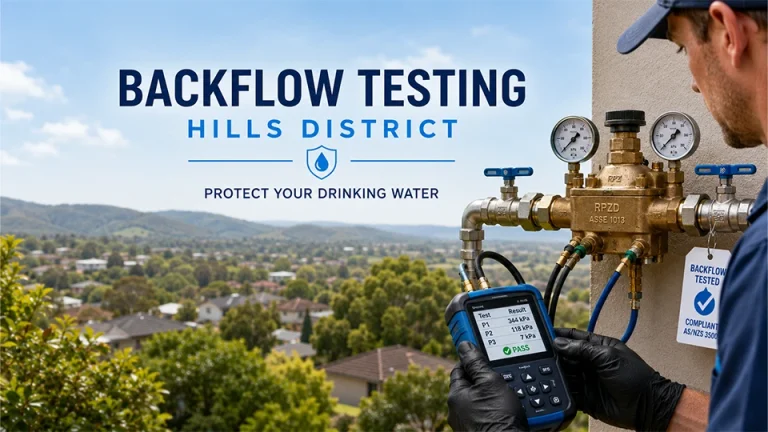
A backflow prevention device sits at the water meter or on specific supply lines and physically stops water from flowing backwards into the mains. There are several types, including:
- Air gaps: a physical separation between the water outlet and a potential contamination source
- Single and double check valves: allow water flow in one direction only
- Reduced pressure zone devices (RPZDs): the most secure option, required for high-hazard properties
Not all devices require annual testing. Non-testable devices like dual check valves are typically fitted at the point of use and handle low-risk situations. Testable devices, however, must be inspected, certified and reported to the relevant water authority every year.
Who Needs Backflow Testing?
Many property owners assume backflow testing is only a commercial concern. It does apply to every commercial site Sweeney’s looks after through its facility management work, but it reaches a lot further than that:
- Restaurants and cafes
- Medical and dental clinics
- Swimming pools and spas
- Apartment complexes and strata buildings
- Caravan parks
- Properties with rainwater tanks connected to the mains supply
- Industrial and manufacturing facilities
- Irrigation systems using fertiliser or chemical injection
If your Hills District property falls into any of these categories and you are unsure when your backflow device was last tested, it is worth finding out. Annual testing is not optional for properties with testable devices. An accredited backflow plumber must carry out the test, complete the compliance paperwork, and lodge the results with Sydney Water within two days. Building Commission NSW sets out the hazard categories and device requirements in its advisory note on cross connection and backflow control.
What Happens During a Backflow Test?
A backflow test is straightforward and causes minimal disruption. The licensed plumber checks the device against the manufacturer’s specifications and the requirements set out in AS/NZS 3500, records the results and provides a compliance certificate. If the device passes, the paperwork is lodged with the relevant authority. Should it fail, the plumber will explain what repair or replacement is needed before a retest is arranged.
The process typically takes between 20 minutes and two hours per device, depending on the type, location and whether any issues are found. Sweeney’s Plumbing handles backflow testing and prevention for residential and commercial clients across the Hills District, managing the full compliance process from inspection through to certification.
What happens if you skip the annual test?
Sydney Water acts on it. Because it keeps a register of every testable device and issues annual reminders, a missed test is visible. Where a property does not meet the requirements, Sydney Water can test the device and charge you for it, restrict the water supply, disconnect the property, or recover the costs of bringing the connection up to standard.
There is also the liability side. If contaminated water is ever traced back to a property with an untested device, the owner is the one holding an out-of-date compliance record. For a restaurant, a medical suite or a strata building, that is a far bigger problem than the cost of the test.
If your property has an irrigation system, a commercial kitchen, a pool, or any kind of connection between potable water and another source, it is worth confirming your compliance is current.
How do you get your backflow testing sorted?
Start by finding out when the device was last tested, then book the test before the anniversary comes around. Sweeney’s Plumbing handles backflow prevention installation, testing and certification across the Hills District and North Shore, including the paperwork that has to be lodged afterwards.
An annual test also pairs well with a broader check of the property, particularly on older sites where the device is not the only thing that has been sitting untouched for a decade. Sweeney’s covers that as part of its regular plumbing maintenance work.
Overdue for a test, or not sure whether your property needs a device at all? Send through the details or call the office on 1800 219 682 and the team will tell you where you stand.