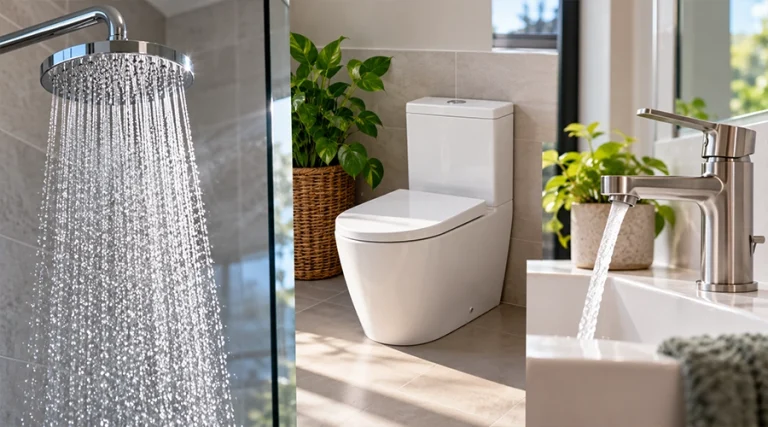
Shorter showers and a bucket in the garden only go so far. Water saving fixtures on the North Shore work whether anyone remembers them or not. That is why they beat good intentions every time.
Timing suits the conversation. The Bureau of Meteorology reports a strong El Nino, with its central Pacific index well above the El Nino threshold. Dry months push garden watering up. A household that has already trimmed the obvious waste has to look at the hardware next.
Which water saving fixtures make the biggest difference?
Showerheads, toilets and washing machines, in that order for most homes. Sydney Water publishes figures that make the gap between old and new hardware plain.
How much does a showerhead really use?
Around 9 litres a minute for a standard one, by Sydney Water’s figures. An efficient showerhead uses just 6 to 7 litres a minute, while older models run 15 to 25.
That top figure deserves a second look. A 20 litre a minute showerhead running three times a day outpaces everything else in some houses. Nothing about the shower feels unusual either, which is why these survive in bathrooms nobody has touched since the nineties.
Replacing one is the cheapest meaningful change available. It also cuts the hot water that goes with it, so the gas or electricity bill moves too.
What about an old single flush toilet?
Single flush toilets use 11 litres per flush. Modern dual flush uses 4.5 litres on a full flush and 3 on a half.
Multiply that across a household and the arithmetic gets interesting. Sydney Water cites one case of a person saving 6,570 litres a year simply by using the half flush. On an old single flush cistern, that option does not exist at all.
Does the washing machine matter?
Yes, more than most people assume. Top loaders use about 110 litres a load against roughly 60 for a front loader.
Appliances are not plumbing work, though the connection is. A plumber sets up the taps and hoses, and the state of those fittings matters as much as the machine. Perished hoses behind a washing machine cause their own problems later.
What does the star rating actually tell you?
How efficient a fixture is, on a scale anyone can read in a showroom. NSW Planning explains that the label carries a zero to six star rating for quick comparison. More stars means greater water efficiency.
Labelling has been mandatory since 1 July 2006. It covers showerheads, plus taps and tap outlets other than taps exclusively over baths. Toilet suites and matched cistern and pan sets come under it too. The label also shows a flow rate figure from laboratory testing. That is the number worth comparing when two products share a star count.
Is there a minimum anyone has to meet?
Yes, for new work. NSW Planning notes the Plumbing Code of Australia minimum for showerheads in new developments: no more than 9 litres a minute. That equals a 3 star WELS rating.
Existing homes face no obligation to upgrade. A bathroom renovation changes that, since new fixtures going in have to meet current requirements. Anyone planning one may as well aim above the minimum while the decision is still open.
Will a low flow showerhead feel weak?
Not necessarily, though pressure decides it. A good efficient showerhead shapes the spray to feel strong at a lower flow rate. A cheap one simply delivers less water.
House pressure matters too. Sydney Water’s licence sets a minimum of 15 metres head at the point of connection. Its network average sits at 52 metres head. Properties at the low end of that range notice a restrictive showerhead far more than properties sitting above the average.
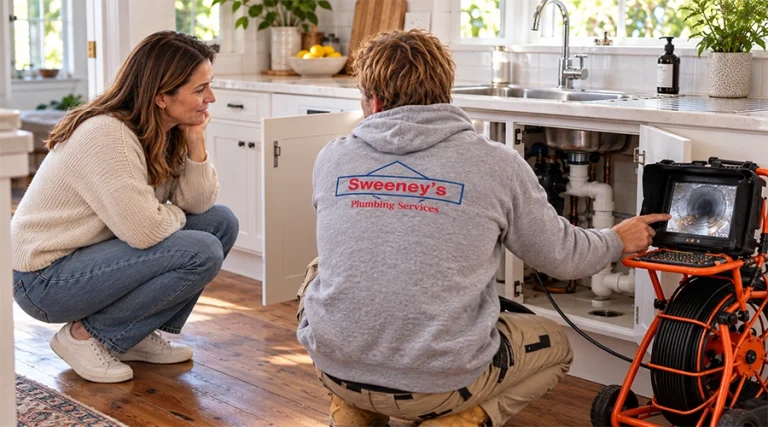
Testing takes a minute. Turn everything off, read the meter, run the front garden tap fully for one minute, then read the meter again. Sydney Water expects around 18 litres a minute at the garden tap from its minimum pressure. Anything well below that deserves a look before anyone blames a new fixture.
Who can replace fixtures, and is there paperwork?
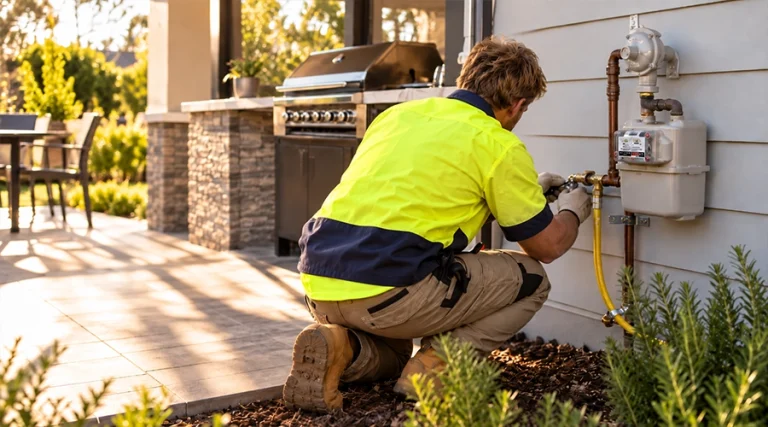
A licensed plumber does the work, and most fixture swaps need no lodged paperwork. Building Commission NSW does not require a Notice of Work for minor tasks such as replacing tapware. Bathroom renovations that keep fixture locations the same are also exempt.
That makes a fixture upgrade one of the simpler jobs to book. The licensing still applies. Sydney Water points out that a homeowner may legally do only minor work, such as changing a tap washer.
Moving a fixture is a different matter. Relocating a basin or a vanity changes the pipework, and that work sits outside the exemption.
What is worth bundling into one visit?
Several small jobs, because the callout is the fixed cost. A plumber already on site with the water off works through a list far more cheaply than across three visits.
- Showerheads and tapware across every bathroom at once
- A cistern or full toilet suite where one is still single flush
- Any tap that drips, since a worn washer wastes water continuously
- The flexible hoses under sinks and vanities, which have a finite life
- A check of incoming pressure while the meter is accessible
Dripping taps belong on that list for a reason. No amount of efficient hardware offsets water running twenty-four hours a day, and a bill that climbs without explanation sometimes points at something hidden.
Water saving fixtures are the part of a bill that never relies on anyone changing their habits. Install them once and the saving turns up every quarter afterwards. Sweeney’s Plumbing fits tapware, toilets and vanities across the North Shore from its Turramurra office. Free cost estimates come first, for approval before anything starts. To work out which changes are worth making in a particular house, get in touch or call 1800 219 682.