Dragging a gas bottle out and finding it empty halfway through cooking gets old. An outdoor gas point in the Hills District runs the barbecue off the same supply as the kitchen. The fuel never runs out mid cook.
Spring is the sensible time to organise it. Nobody wants to wait on a booking in late December. The work also takes planning rather than a quick visit.
What is an outdoor gas point, and how does it work?
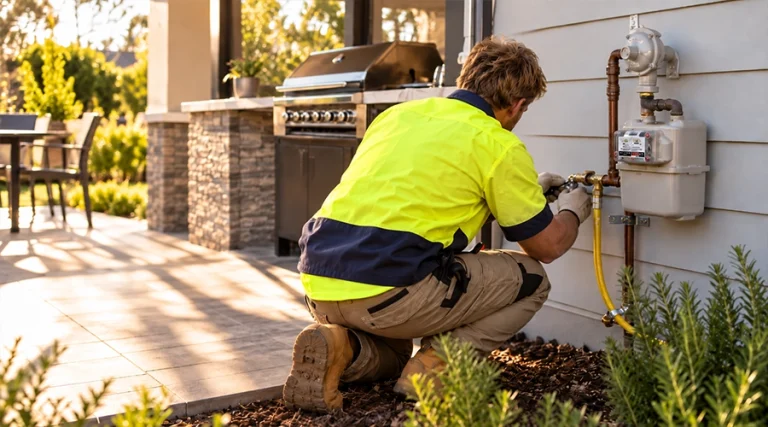
It is a gas outlet installed outside, usually on an exterior wall or in an outdoor kitchen. A flexible hose runs from the outlet across to the barbecue. A quick connect fitting lets that hose come off when the barbecue is not in use.
The outlet draws from the existing gas line. On network gas, that is the same supply feeding the cooktop and the hot water system. Properties on bottled gas can have a point installed too, though the setup differs and so does the paperwork.
Where can the outlet go?
Close to where the barbecue lives, and somewhere the gas line can reasonably reach. A wall near the alfresco area is the usual answer.
Distance from the existing line drives most of the cost. A point on the other side of an external wall from the kitchen is straightforward. One at the far end of the yard means running pipe. Route matters as well. Under a paved area, through a garden bed, or along a wall all involve different work.
Ventilation rules out some spots. Gas appliances need open air around them. An enclosed alfresco space or a roofed outdoor kitchen is a different conversation from an open patio, and a gasfitter works that out on site rather than over the phone.
Does the barbecue need to match the gas type?
Yes, and this catches people out. A barbecue built for LPG bottles will not run correctly on network gas without a conversion.
Burners and jets suit the gas they were made for. The two supplies deliver different pressures and energy content. Many barbecues convert with a kit from the manufacturer. Some do not. Worth checking the model before buying anything, or asking the gasfitter to check it.
Who is allowed to install one?
A licensed gasfitter, and nobody else. The NSW Government puts it plainly: always use a licensed gasfitter for any repair or renovation involving gas, including relocating or replacing gas appliances.
Anyone can check a licence online, or by calling 13 27 00. Sweeney’s Plumbing holds gas licensing and works as an authorised installer for Rheem, Rinnai and Thermann.
What paperwork should the homeowner receive?
A compliance certificate, and the type depends on the gas supply. On network gas, the gasfitter tests the installation for defects. A certificate of compliance then goes to Building Commission NSW within five business days of finishing.
Bottled gas works differently. The gasfitter inspects the containers, regulators and appliances. Testing covers the whole installation. A compliance plate goes on, and a certificate of inspection goes to the owner. Either certificate shows the licensee’s name and licence number.
Keep whichever one arrives. It is the record that the work was done properly, and it matters at sale time.
Why not just run a hose from the kitchen?
Because unlicensed gas work is illegal, and the risk is real. Gas leaks do not announce themselves politely.
Jemena distributes gas across much of Sydney and sets out what to do if there is ever a smell of gas. Recognise it first, since gas smells like rotten eggs or cabbage. Leave the area and turn off ignition sources, without smoking or using a phone. Then report it. Jemena takes gas faults and emergencies on 131 909, any time. Worth knowing the other warning signs as well.
A properly installed point removes that risk rather than managing it. Pipe sized for the load, a tested connection, an isolation valve, and a certificate to prove it.
What else is worth doing at the same time?
Anything else on the gas side, because the gasfitter is already there with the line exposed. A few jobs pair naturally with this one:
- a second point for a patio heater, which runs on the same principle
- a cooktop or oven replacement, if one is on the list anyway
- a service or safety check on existing gas appliances
- a look at the hot water system, particularly if it is getting on in years
Combining visits saves a second callout fee. One gasfitter also gets eyes on the whole installation instead of a single new fitting.
Barbecue season does not wait, and neither does the booking calendar. Sort an outdoor gas point in spring and the only thing left to organise in December is who brings the salad. Sweeney’s Plumbing covers the Hills District from its Seven Hills office. Free cost estimates come first, for approval before any work starts. To talk through where the point could go, get in touch or call 1800 219 682.