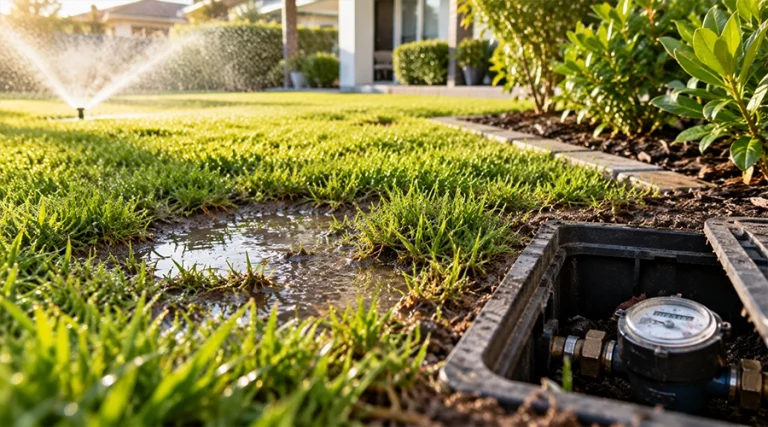
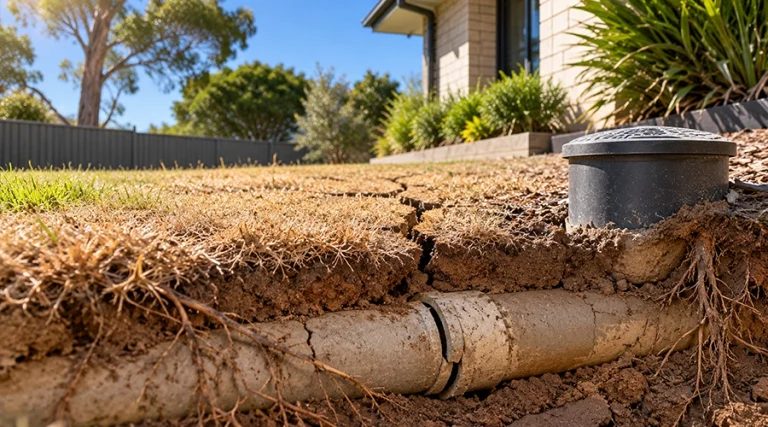
Slab on ground construction puts the drainage under the floor and then covers it in concrete. The pipe sits there happily for decades, right up until the ground around it moves. A cracked pipe under slab flooring is rarely dramatic at the start. It starts as a smell that will not clear. Next comes a damp patch that never dries. Then a drain that runs slower every month.
How does a pipe under a slab break?
The ground moves and the pipe does not. Soil swells as it takes up water. It shrinks again as it dries out. A rigid drain bedded in that soil takes the strain at its joints. Add a dry summer, a wet autumn and a few mature trees. Each draws moisture out of one side of the house. The movement is never even.
Tree roots then make the most of it. They follow moisture to a hairline crack, grow inside the pipe and widen the fault from the inside. By the time the drain blocks, the crack has usually been there for years.
What does reactive soil have to do with it?
It decides how much the ground shifts with the seasons. Shale and clay soils move far more than sandy ground does. Those soils run through much of the Hills District and the upper North Shore. The same house design can behave differently in two suburbs.
NSW treats this as a design problem rather than bad luck. Schedule 3 of the Plumbing and Drainage Regulation 2017 calls for flexible joints in several ground conditions. They cover filled ground, unstable ground, water charged ground and soil classified H1, H2 or E. The rule applies once a recognised expert judges that movement could damage the drain and nearby structures. Building Commission NSW explains the process in its note on drains laid in ground that is not stable.
What has to happen on a new build?
A design, not a decision made in the trench. The companion note on using joints that allow for ground movement sets out three steps. A recognised expert prepares a site specific design showing where each joint sits. That design goes to the plumbing regulator with the Notice of Work. The installation then has to match it. The same note points to AS 2870. That standard covers drains under slabs and footings on moderately, highly or extremely reactive soils. A house built long before that process existed usually has rigid joints the whole way through.
What are the warning signs inside the house?
It depends on which pipe has failed, and two very different ones run under a slab.
A waste line gives itself away through smell and damp. Watch for a persistent sewer odour near a floor waste or a bathroom wall. Flooring that lifts or stains in one spot points the same way. So does several fixtures draining slowly at once.
A pressure water line behaves differently. Look for a patch of floor that feels warm underfoot. Listen for running water with every tap closed. Check whether the meter keeps ticking overnight. A bill that climbs for no obvious reason tells the same story.
How is the exact spot found without opening the floor?
With a camera and a locator, before anyone cuts concrete. A camera run down the line shows the fault and measures its distance from the access point. A transmitter in the camera head then marks that position on the surface above. That turns a guess into a mark on the floor. The difference is a small opening rather than half a room.
Can relining fix a cracked pipe under slab flooring?
Often, yes. Rebuilding a damaged line from the inside suits a pipe that still holds its shape and grade. That describes most cracked and root damaged sections. It avoids cutting the slab at all. More on how long a relined section lasts.
It is not always the answer. Some pipes have collapsed, lost their fall or need a new connection. The honest fix there is to open up and replace the failed section. A camera survey separates the two. The same question comes up where a junction has failed further down the line.
Who pays, and what should happen first?
The owner is responsible for the pipework on the property. Sydney Water sets out which parts of the wastewater line it repairs and which parts fall to the owner. The boundary matters here. A fault under the house sits squarely on the owner’s side of it. Home insurance wording varies a great deal on this point, so the policy is worth reading first.
The first job is still the camera. A quote written without one is guesswork, and guesswork under a slab is expensive. Sweeney’s Plumbing works across Castle Hill, Baulkham Hills and the wider Hills District. Every free cost estimate goes to the owner for approval before work starts. A damp patch or a smell that keeps coming back deserves a look before the next wet spell. Send the details through the contact page, or ring the office on 1800 219 682 to book an inspection.