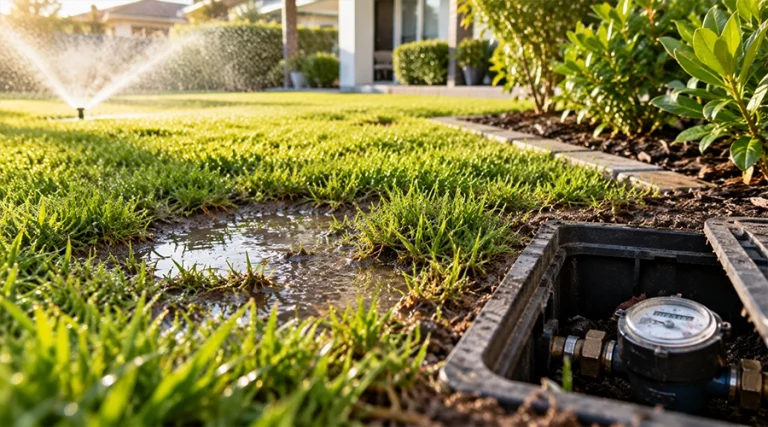
A water bill arrives higher than last quarter and the explanation seems obvious. Hot weather, more showers, the garden drinking everything. So nobody looks further, and that is exactly how a leak survives a whole summer undetected. The hidden leak allowance on the North Shore exists because Sydney Water knows how often this happens.
Conditions this summer make the trap worse. The Bureau of Meteorology reports a strong El Nino. Its central Pacific index sits well above the El Nino threshold, and models expect the event to persist into autumn 2027. Dry months mean heavier watering, and heavier watering hides a leak beautifully.
How can a leak hide in a summer bill?
Because summer usage climbs anyway. A leak needs to stand out against normal consumption to get noticed, and in January nothing stands out.
Ordinary summer habits add up. Sydney Water puts a sprinkler at 900 litres an hour. Run one twice a week through a dry spell and the bill moves well before any fault contributes. A steady underground leak then disappears inside that increase.
Which leaks never show on the surface?
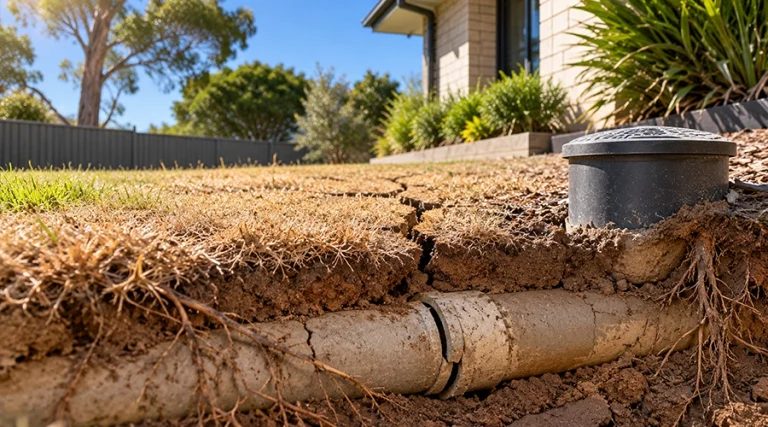
The ones with somewhere to drain. Water escaping below a slab or into sandy soil leaves nothing visible for months.
Sydney Water lists the signs worth watching. Wet patches on a lawn and damp walls are two. Unusually green grass over a patch of yard is another, since the grass finds water nobody else can see. A hot water system expansion valve that drips constantly belongs on the list too.
Nothing on that list involves a puddle. Each one is a hint rather than evidence, which is why the meter settles the question.
How does someone test for one in an hour?
By reading the meter twice with nothing running. Sydney Water sets out five steps, and the whole thing needs no tools.
- Turn off every tap and water-using appliance
- Find the meter, usually at the front of the property
- Write down the numbers on the dials
- Leave the water alone for at least an hour
- Check the dials again
Numbers that moved mean water went somewhere. Dishwashers and washing machines have to be genuinely off rather than paused. Nobody can use a toilet during the hour either, which is the part most households get wrong.
What if the meter moves but nothing is running?
Then the leak sits between the meter and the house, or inside it. That result narrows the search considerably.
A plumber takes it from there, isolating sections to work out which run is losing water. Where the fault sits inside a wall, Sweeney’s Plumbing can freeze the pipe to stop flow while the damaged section comes out. No need to drain the whole system for one repair.
Who pays to find and fix it?
The property owner, for everything on their side of the connection. Sydney Water states the owner is responsible for their connection to the system. A licensed plumber has to do that work.
Where does Sydney Water’s responsibility start?
At its own infrastructure, with a little more reach than most people expect. Sydney Water often repairs the water service between the main and the meter at no charge, up to one metre inside the boundary. It also owns and maintains the meter itself.
Worth knowing before anyone starts digging. A leak near the front boundary might not be the owner’s problem at all. A quick call establishes that before a plumber opens up a footpath.
What is the hidden leak allowance?
A goodwill credit on the bill. Sydney Water gives both residential and non-residential owners 50% of the water usage charge for the most impacted quarter.
Residential customers can claim it once every five years. The page refers to a separate policy for the full eligibility criteria. Details of what qualifies sit there rather than on the summary.
Two things follow from that. The credit covers part of the damage rather than all of it. Finding a leak early still beats claiming later. The claim also attaches to a quarter, so the paperwork works better while that bill is current.
What does it cover for a business or strata property?
More, in one specific way. Non-residential properties with wastewater charges also get 100% of the increase in wastewater usage charges covered.
The five-year limit works differently as well. Sydney Water applies no five-year limit to non-residential wastewater events, and states that all wastewater events qualify. Anyone managing a commercial building or a strata scheme should know that. The water usage credit and the wastewater credit follow separate rules.
What does the repair involve?
It depends entirely on where the water is escaping. Location drives the method, which is why the search comes before any quote.
A leak in accessible pipework under a house is straightforward. One inside a wall cavity means opening a section of wall, repairing the pipe and making good. Water escaping under a slab is the hardest case. The repair sometimes runs a new section rather than chasing the original line through concrete.
Underground leaks on a long run suit a different approach again. Where the pipe is otherwise sound, relining or patching from inside restores it without excavating the length of a driveway. A sudden failure is a different job altogether, and a burst line will not wait for a meter test.
A bill that climbs every quarter without an obvious reason is worth an hour with the meter. Plenty of smaller habits also move a bill, though none of them explain a jump this size. Sweeney’s Plumbing handles leak location and repair across the North Shore from its Turramurra office. Free cost estimates come first, and repair work carries a 12 month guarantee. To have a suspect bill investigated properly, get in touch or call 1800 219 682.