Most North Shore properties have two separate drains leaving them. One takes rain off the roof and the yard. The other takes everything from the toilets, showers and sinks. Working out whether a stormwater or sewer blockage sits behind the problem matters more than it sounds, because the two pipes fail in different ways, get cleared with different methods and are not always the same person’s responsibility.
What is the difference between the two pipes?
One carries rain and the other carries waste, and they are never meant to meet. Stormwater leaves the property and discharges to a kerb, a street pit or a watercourse with no treatment at all. The sewer runs to a treatment plant. A property where the two have been joined somewhere, usually by an old downpipe tied into the wrong line, sends rainwater into the sewer every storm and overloads it.
Which signs point at the sewer?
Anything involving the fixtures inside the house. Toilets that clear slowly or bubble, a shower that backs up when the washing machine drains, gurgling from a floor waste and a smell that keeps returning all point at the waste line. Water appearing at the overflow relief gully (the grated riser in the garden designed to release a surcharge outside instead of through the shower) is the clearest sign of all.
Sydney Water lists tree roots, wet wipes and hardened fats as the main causes on its page covering wastewater blockages. On the North Shore, roots do most of the damage. Mature street trees and large established gardens sit directly above sewer lines laid decades ago, and roots find the smallest crack.
Which signs point at stormwater?
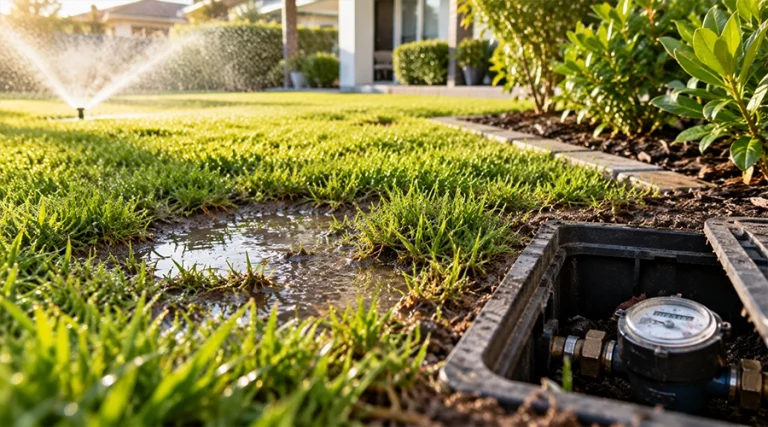
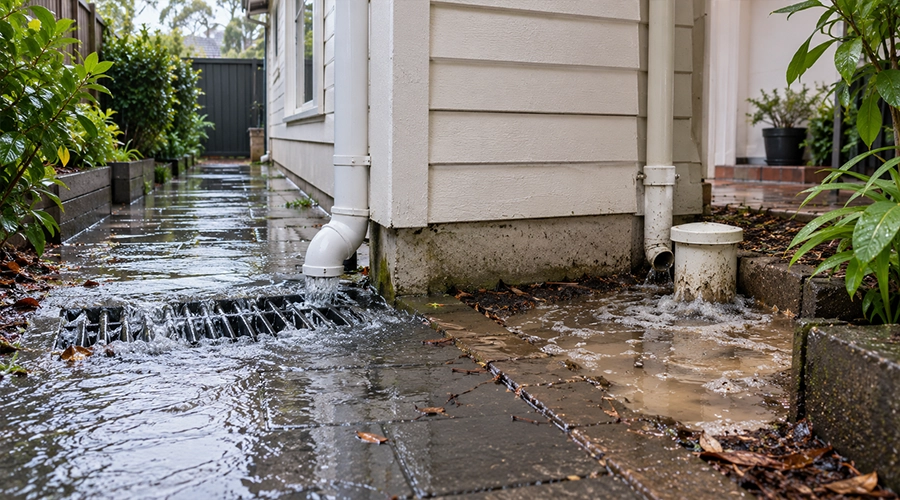
Anything that only happens while it is raining. Gutters that overflow in moderate rain, water pooling at the base of a downpipe, a surcharge pit lifting its lid, or a damp strip along a boundary fence that dries out between storms. Indoors, nothing misbehaves at all.
The other giveaway is timing. A stormwater fault appears within minutes of rain starting and clears within hours of it stopping. A sewer fault does not care about the weather.
Why does heavy rain make a stormwater or sewer blockage harder to pick?
Because rain loads both systems at the same time. Sydney Water notes that heavy rainfall can overwhelm the wastewater network, so a sewer that copes all summer can surcharge during a downpour. At the same moment, a stormwater line that was already half full of leaf litter gives up.
Steep North Shore blocks add one more possibility. Water running off a neighbouring property above can overload a stormwater line that is perfectly sound, which is a drainage problem rather than a blockage.
Who is responsible for fixing each one?
The property owner owns the pipes on the property, and what happens past the boundary differs between the two systems. Sydney Water sets out which sections of the wastewater line it repairs and which the owner repairs.
Stormwater is a council matter instead. Hornsby Shire Council explains what an owner is responsible for on private property and when it will investigate runoff coming from a neighbour.
What about a line shared with a neighbour?
Shared lines are common on the North Shore and they complicate things. Ku-ring-gai Council covers maintenance out to the kerb and drainage shared between allotments, which is the arrangement on many older subdivisions where one property drains through another.
What is worth doing before calling anyone?
Write down when the problem happens and which fixtures are affected. That single note usually settles which pipe is at fault before a plumber arrives, and it saves paying someone to work it out on site.
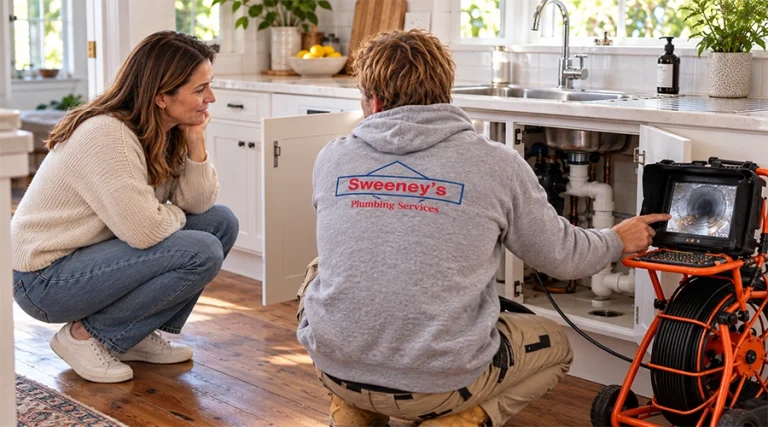
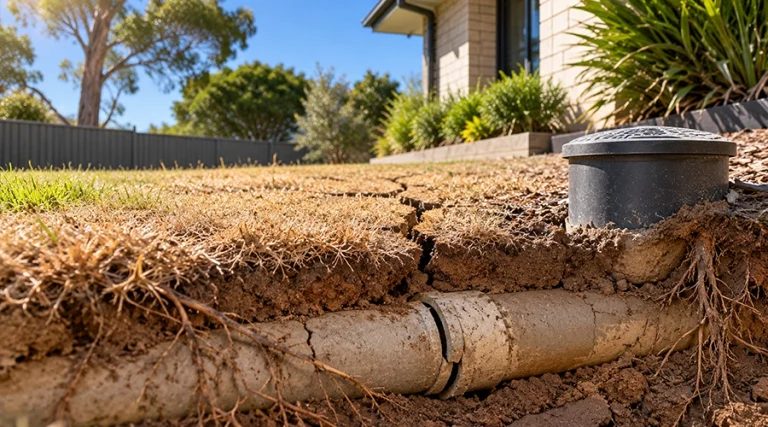
From there the job splits cleanly. A camera run down the pipe finds the exact fault and its distance from the access point. Clearing the wastewater line deals with roots and fat. Clearing the lines that carry roof and surface water deals with silt and leaf litter. Where the camera shows a broken section rather than a dirty one, the question becomes what happens when a line has actually collapsed.
Sweeney’s Plumbing works across the lower and upper North Shore and can usually tell the two systems apart in one visit. Describe what happens and when through the contact page, or ring 0418 211 977 if waste water has already reached the gully grate or a floor.