A blocked drain that keeps coming back is trying to tell you something. Clearing it the same way each time only treats what you can reach, not what is actually causing the problem. For Hills District homeowners and businesses dealing with recurring blockages, slow drains or unexplained gurgling, a CCTV drain inspection is often the most practical next step, and the fastest way to get a clear answer without tearing up your property.
What Is a CCTV Drain Inspection?
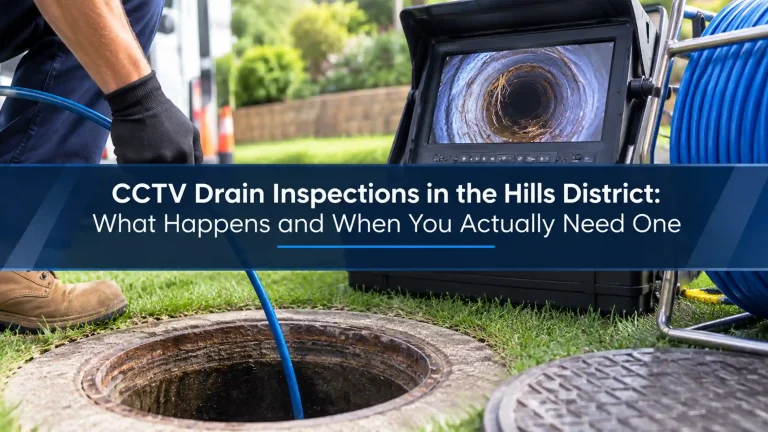
A CCTV drain inspection involves feeding a waterproof, high-definition camera through your drainage system on a flexible cable. As it moves through the pipes, it transmits live footage directly to a screen so the plumber can see the internal condition of your drains in real time. There is no digging, no guesswork and no need to disturb garden beds or paving to find the problem. The camera identifies the exact location and nature of the issue, whether that is a blockage, a crack, tree root intrusion, a collapsed section or displaced pipe joints.
Why do Hills District drains block so often?
Two things cause most of it: big trees and ageing pipework. Both sit underground where nothing shows until the drain backs up.
Which trees are the problem?
The large species that define the area. Properties throughout the Hills District, from Castle Hill and Baulkham Hills through to Kellyville, Rouse Hill and Cherrybrook, are surrounded by mature trees. Eucalypts, figs, camphor laurels and other large species common to the area send roots significant distances in search of moisture, and drainage pipes are a reliable source. Once roots find a crack or a joint, they grow quickly and cause blockages that worsen with every season.
What if the pipes are old?
Older pipe materials fail differently, and a camera is the only way to see how far it has gone. Older homes in the Hills District may also have clay or concrete drainage pipes installed decades ago, which are more prone to cracking, sagging and root infiltration than modern PVC piping. A CCTV inspection makes it possible to assess the actual condition of those pipes without any excavation.
Who pays for the repair?
That depends entirely on where the fault sits. According to Sydney Water, property owners are responsible for maintaining all wastewater pipes between the property and the connection with Sydney Water’s main sewer. Knowing exactly where a problem sits means knowing whether the repair cost falls to you or to the relevant authority.
What Does the Camera Actually Find?
The camera can identify a wide range of issues that are impossible to diagnose from the surface, including:
• Tree root intrusion through pipe joints or cracks
• Cracked, fractured or collapsed pipe sections
• Sagging or bellied pipes where waste collects
• Grease, scale or debris build-up restricting flow
• Displaced or offset pipe joints
• Illegal connections between stormwater and sewer lines
• Foreign objects lodged in the pipe
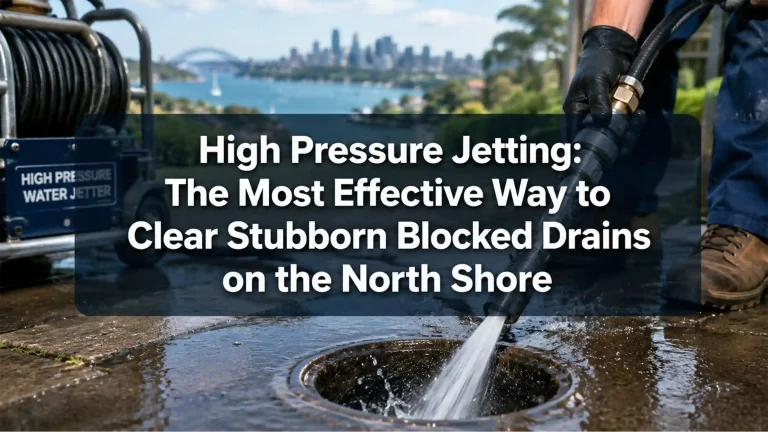
Once the camera locates the issue, the plumber can advise on the most appropriate repair, whether that is a high pressure jet clean, pipe relining to repair damage without digging, or excavation and replacement where necessary. All drainage work in NSW must comply with the Plumbing Code of Australia, which sets the standards for repair, installation and maintenance of drainage systems.
When Should You Book a CCTV Drain Inspection?
Not every blocked drain needs a camera inspection, but there are situations where it is clearly the right call:
• Recurring blockages that keep coming back after clearing
• Slow drains across multiple fixtures in the home or building
• Gurgling sounds from toilets or floor grates after rain
• Unpleasant odours from drains without an obvious cause
• After tree root clearing to confirm the extent of any pipe damage
• Before or after a renovation to understand what you are working with
• Before purchasing a property to check the condition of underground drainage, as standard building reports carried out under Australian Standard AS 4349.1 do not include a camera inspection of underground pipes.
Documentation matters if the work is ever questioned. Building Commission NSW, which handles disputes about specialist work including plumbing, advises putting what was agreed in writing and keeping a copy of it. Camera footage does the same job for the diagnosis. It gives you a dated record of what was actually found underground before anyone starts quoting on repairs. See the guidance on resolving building disputes for the steps involved.
What Happens After the Inspection?
Once the camera footage has been reviewed, the plumber provides a clear explanation of what was found and what the repair options are. In most cases, a recorded report can be provided, which is useful for strata managers, property buyers, landlords and anyone involved in an insurance claim or dispute about drainage responsibility. Sweeney’s Plumbing services the Hills District and surrounding areas, working with both residential and commercial clients. The team uses HD camera equipment and can combine the inspection with jetting or sewer drain repairs in the same visit where needed, saving time and disruption.
Stop Guessing What Is in Your Pipes
A drain that keeps blocking is not a minor inconvenience. Left undiagnosed, it can lead to sewage backups, structural damage and costly emergency call-outs. Getting a camera inspection done gives a clear picture of what is happening underground so the right fix is made the first time.
Sweeney’s Plumbing works across the Hills District from its Seven Hills office, with free estimates you approve before anything starts. If the same drain has blocked twice now, book the camera in first and stop paying to clear the same blockage. Get in touch here or ring the office on 1800 219 682.