Most bathroom renovations go wrong in the same place: not in the tiling or the tapware, but in the fortnight before demolition, when nobody checks what the plumbing will actually allow. Moving a toilet a metre sounds simple until the drainage fall says otherwise.
Bathroom plumbing on the North Shore comes with its own constraints. A lot of the housing stock is old enough to have galvanised steel or cast iron pipework behind the walls, and a renovation is the one moment when replacing it is cheap rather than catastrophic. In NSW, a licence or certificate is required for any plumbing work regardless of its cost, so this is not a stage to hand to a handyman with a good rate.
For over 26 years, Sweeneys Plumbing has worked on bathroom renovations and repairs across the North Shore and Hills District. What follows is what tends to cause problems, and what is worth deciding before the first tile comes off.
What are the most common bathroom plumbing problems on the North Shore?
Bathroom plumbing North Shore properties experience several recurring issues that affect daily comfort and function.
Why do taps and shower fittings keep leaking?
Dripping taps waste water and increase utility bills whilst creating annoying sounds that disturb sleep. Most leaking taps result from worn washers, damaged O-rings, or corroded valve seats that deteriorate over time. Modern mixer taps contain ceramic disc cartridges that eventually wear and require replacement.
Shower fixtures present additional challenges when leaks develop behind tiles and walls, causing hidden water damage to structural timber and creating conditions for mould growth. Professional plumbers identify whether surface repairs suffice or if complete fixture replacement becomes necessary to prevent ongoing problems.
Why won’t the toilet stop running?
Toilets that continue running after flushing waste significant amounts of water, sometimes hundreds of litres daily. This problem typically stems from faulty flapper valves, damaged fill valves, or incorrectly adjusted float mechanisms within the cistern. Whilst some homeowners attempt DIY repairs, incorrect adjustments can worsen the problem or damage cistern components.
Persistent running usually means the cistern internals need replacing rather than adjusting, and it is worth dealing with before the bathroom is rebuilt around it. For a more in depth breakdown, you can read more on our article on what keeps a cistern running.
Why is the shower draining slowly?
Hair, soap scum, and other debris accumulate in bathroom drains over time, causing slow drainage that gradually worsens. Shower drains particularly suffer from hair buildup that combines with soap residue to create stubborn blockages. Chemical drain cleaners often provide temporary relief whilst corroding pipes and creating future problems.
Professional drain cleaning using high-pressure water jetting or mechanical snakes removes blockages completely without damaging pipes. Recurring blockages sometimes indicate deeper problems further down the line, where Sydney Water’s guide to wastewater blockages explains what the owner is responsible for and what sits with the water authority. A drain inspection settles which one you are dealing with.
Why is the water pressure so weak?
Weak water pressure in showers and taps frustrates homeowners and makes basic tasks difficult. Bathroom plumbing North Shore homes experience low pressure due to several causes including corroded pipes, partially closed valves, clogged aerators, or faulty pressure regulators. Older galvanised steel pipes common in North Shore homes gradually corrode internally, restricting water flow.
Identifying the specific cause requires systematic testing to determine whether pressure problems affect individual fixtures or the entire bathroom, which is worth reading about in what causes low and high water pressure. Modern pipe materials like copper and PEX eliminate corrosion issues whilst restoring proper water flow.
How do you spot a leak you can’t see?
Hidden pipe leaks behind walls, under floors, or within ceiling spaces cause extensive damage before becoming obvious. Signs include damp patches on walls or ceilings, unexplained increases in water bills, musty odours, or visible mould growth. Cast iron and galvanised steel pipes in older North Shore homes become particularly susceptible to corrosion and leaking.
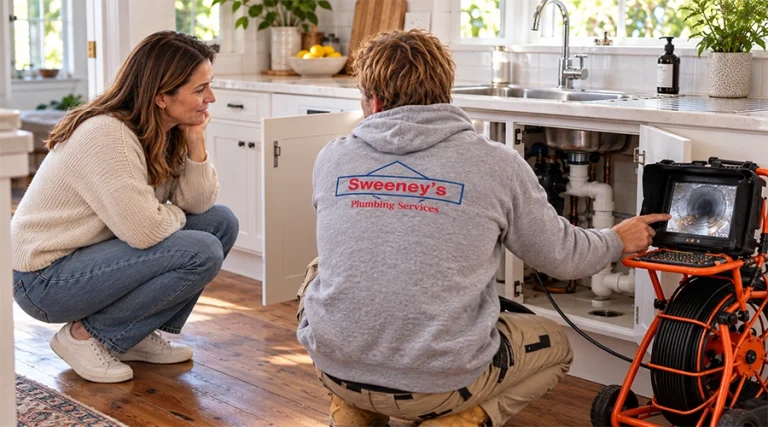
Early detection through professional leak detection services minimises repair costs and prevents serious structural damage. Modern thermal imaging cameras and acoustic leak detection equipment locate hidden leaks without destructive exploration.
What should you sort out before the renovation starts?
Renovation projects present opportunities to upgrade bathroom plumbing North Shore properties whilst avoiding common mistakes that create future problems.
Can you move the toilet, shower or bath?
Moving fixtures like toilets, showers, and vanities requires rerouting water supply and drainage pipes. Whilst some layout changes prove straightforward, others encounter obstacles like insufficient floor joist spacing, inadequate vent sizing, or structural limitations that increase costs significantly.
Professional plumbers assess feasibility before demolition begins, identifying potential issues and providing accurate cost estimates. Baths are a good example of why that matters. Building Commission NSW’s advisory note on floor waste and fixture requirements sets out that where a bath trap cannot be reached for inspection or maintenance, as is common on slab-on-ground construction, the bath has to discharge untrapped to a floor waste gully. A non-accessible trap tucked under the bath does not comply, and that is an expensive thing to discover after the tiling is done.
Should the old pipework be replaced at the same time?
Bathroom renovations provide ideal opportunities to replace aging pipes before they fail. Old galvanised steel or cast iron pipes should be replaced with modern materials during renovations rather than waiting for leaks to develop after completing expensive tile work and finishes.
Upgrading to copper or PEX piping during renovations proves far less expensive than emergency repairs requiring demolition of new finishes. Professional plumbers identify which existing pipes require replacement and which remain serviceable.
What does the waterproofing have to cover?
Proper waterproofing prevents water penetration behind tiles and into wall cavities where it causes structural damage and mould growth. Australian Standards require specific waterproofing procedures (as stated in AS 3740) for wet areas including showers, baths, and around vanities.
Professional waterproofing applied before tiling creates barriers that protect underlying structures whilst preventing costly water damage. Cutting corners on waterproofing to save money creates expensive problems requiring complete bathroom reconstruction.
Do the fixtures you pick actually matter?
Modern water-efficient fixtures save money on utility bills whilst meeting environmental standards. However, some off-brand fixtures lack available replacement parts when components fail, requiring complete fixture replacement rather than simple repairs.
Quality branded fixtures cost more initially but provide reliable performance, available parts, and manufacturer warranties that protect your renovation investment. Sweeney’s handles basin and vanity installations, toilet installations and tap repairs and replacements as part of a renovation, and can tell you which fittings suit your water pressure before you buy them.
When do you need a licensed plumber on the North Shore?
Certain situations require professional bathroom plumbing North Shore expertise rather than DIY attempts:
- Planning bathroom layout changes or additions
- Replacing old corroded pipes or upgrading plumbing materials
- Installing new fixtures requiring supply and drainage connections
- Addressing persistent leaks, blockages, or low water pressure
- Ensuring waterproofing compliance with Australian Standards
- Obtaining required permits and inspections for renovation work
- Dealing with hidden water damage or suspected pipe leaks
Licensed plumbers carry insurance, warranties, and qualifications necessary for quality work that meets code requirements and protects your home.
Professional Bathroom Plumbing Services Across North Shore and Hills District
Sweeneys Plumbing provides comprehensive bathroom plumbing North Shore and Hills District renovation and repair services including fixture installations and replacements, complete bathroom replumbing, leak detection and repairs, drain cleaning and blockage removal, waterproofing and compliance work, water pressure diagnosis and solutions, and renovation planning and consultation.
Our licensed plumbers bring over 26 years of experience to every bathroom project, whether simple tap repairs or complete bathroom renovations. We service all suburbs across the North Shore and Hills District including Castle Hill, Baulkham Hills, Kellyville, Pennant Hills, Carlingford, and Epping.
The cheapest time to fix pipework is while the walls are open. The most expensive is eighteen months later, through new tiles. A plumber walking through the bathroom before demolition can tell you which of the two you are heading for, and you’ll get a free estimate to approve before any work starts.
Planning a renovation anywhere across the North Shore? Send through the details or call the office on 1800 219 682, and bring the plans if you have them.