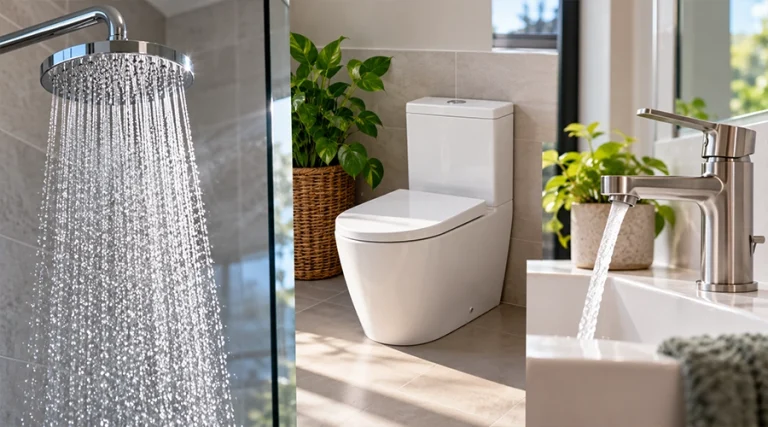
A shower that barely wets your hair and a tap that blasts water across the sink are opposite complaints with a surprising amount of overlap. Both are water pressure problems, and on the North Shore both are common, often in streets only a few minutes apart.
The reason is geography. Sydney Water distributes water by gravity from reservoirs at the high points of each supply zone, so what arrives at your property depends on how far you sit from the reservoir and how high you sit in relation to it. Houses down in the valleys get more pressure. Houses up near the ridge get less. Across the network the average is 52 metres head, the operating licence floor is 15 metres head at the point of connection, and some properties receive more than 100 metres head.
For over 26 years, Sweeneys Plumbing has diagnosed pressure faults across the North Shore and Hills District. Most turn out to be one of six things.
What causes low water pressure in North Shore homes?
Five faults account for nearly all of it, and the first thing to establish is whether the problem is the whole house or one fixture.
Low water pressure problems North Shore residents notice most often stem from several common culprits within the home’s plumbing system.
Are your pipes corroded?
Older homes across the North Shore and Hills District often have galvanised steel pipes that corrode over time. As pipes age, rust and mineral deposits accumulate along the interior walls, restricting water flow and causing noticeable drops in pressure. If you notice strong water pressure when you first turn on a tap that quickly diminishes, clogged pipes are likely the issue.
Modern replacement with copper or PEX piping restores proper flow and eliminates ongoing corrosion problems. A professional plumber can assess whether partial or complete repiping is necessary to resolve water pressure problems North Shore homes face due to aging infrastructure.
Has the pressure regulator failed?
Your home’s pressure regulator controls the force of water entering your plumbing system from the mains. This bell-shaped device typically sits near where your main water line enters the property. When pressure regulators malfunction, they cause either excessively high or frustratingly low water pressure throughout your entire home.
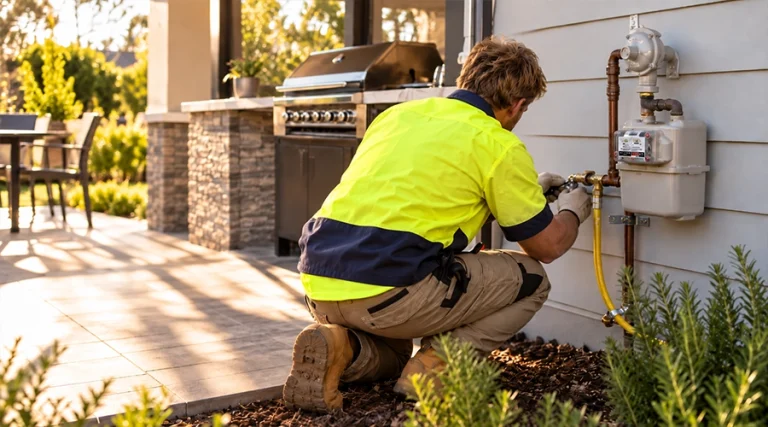
Testing a pressure regulator means putting a gauge on an outdoor tap and reading what arrives at the property. Australian gauges read in kilopascals, and for reference Sydney Water’s network average of 52 metres head works out to roughly 510 kPa, while the 15 metres head minimum in its operating licence is closer to 150 kPa. A reading well outside what the rest of the street gets, or a reading that swings about during the day, points at the regulator rather than the mains.
Is it just one tap or shower?
Sometimes water pressure problems North Shore homeowners report affect only specific fixtures rather than the whole house. Tap aerators and showerheads contain small screens with tiny holes that become clogged with mineral deposits, particularly in areas with hard water. Sydney’s North Shore water supply can carry minerals that accumulate over time.
Removing aerators and showerheads, then soaking them overnight in white vinegar, dissolves mineral buildup and often restores normal flow. If cleaning doesn’t improve pressure, the fixture itself may be corroded and require replacement.
Is a valve only half open?
Your home has a main shut-off valve and a water meter valve controlling flow into your property. If these valves are not fully open, they restrict water entering your plumbing system and cause low pressure throughout your home. This issue commonly occurs after plumbing work when valves are not completely reopened.
Locating these valves (typically near your water meter or where the main line enters your home) and making sure they are fully open resolves a surprising number of pressure complaints. Turn valves anticlockwise to open them completely. Sydney Water gives the same advice as the first thing to check: confirm the tap on the water meter is fully on, then the taps controlling flow to the hot water system. If pressure is unexplained or the water stops altogether, their 24 hour hotline is 13 20 90.
Could a hidden leak be stealing the pressure?
Undetected leaks within your plumbing system divert water away from fixtures, reducing available pressure. Common leak locations include:
- Under concrete slabs (slab leaks)
- Behind walls and in ceiling spaces
- Around toilet cisterns and under sinks
- In underground pipes between the metre and your home
Signs of hidden leaks include damp spots on walls or ceilings, unexplained increases in water bills, the sound of running water when all taps are off, or soggy patches in your garden. Professional leak detection services use specialised equipment to locate hidden leaks without destructive exploration.
What does water pressure that is too high do?
Low pressure is annoying. High pressure is expensive, and Sydney Water runs an entire program to bring it down because of what it does to pipework. Where a property sits low in its supply zone it can receive more than 100 metres head, roughly double the network average, and that shows up as:
- Leaking taps and toilet cisterns
- Burst pipes and damaged fixtures
- Premature failure of appliances like dishwashers and washing machines
- Increased water consumption and higher bills
- Loud banging noises (water hammer) when taps are turned off
High pressure typically results from faulty pressure regulators or direct connection to high-pressure mains supply. Professional plumbers adjust or replace pressure regulators to bring pressure within the safe 40-80 PSI range, protecting your plumbing system from damage.
When should you stop troubleshooting and call someone?
Some water pressure problems North Shore homeowners can troubleshoot themselves, like cleaning aerators or checking valve positions. However, professional plumbing services become necessary when:
- Pressure problems affect your entire home rather than single fixtures
- You suspect corroded pipes require replacement
- Your pressure regulator needs testing or replacement
- Hidden leaks may be reducing pressure
- Pressure remains outside the normal 40-80 PSI range
- DIY solutions fail to restore adequate pressure
Pressure regulator work and repiping are licensed work. In NSW a licence or certificate is required for any plumbing, draining or gasfitting work regardless of what it costs, with fines up to $22,000 for an individual doing it unlicensed. The trade also has a national body in the Institute of Plumbing Australia, which has represented plumbers since 1954 and is a nominating organisation to Standards Australia.
How do you avoid pressure problems in the first place?
Regular plumbing maintenance helps prevent many water pressure problems North Shore properties develop over time:
- Book an annual check to catch corrosion or leaks early, which is part of regular plumbing maintenance
- Clean tap aerators and showerheads every few months to prevent mineral buildup
- Install a water softener if your area has particularly hard water
- Monitor your water pressure periodically with an inexpensive gauge
- Address small leaks promptly before they worsen and affect pressure
- Consider upgrading old galvanised pipework to modern materials, particularly if a renovation is coming up and the walls will be open anyway (see what to sort before a bathroom renovation)
One thing worth knowing if your pressure drops after work in the street: Sydney Water reduces pressure deliberately in some areas, and it notes that instantaneous hot water systems, corroded galvanised pipes and existing pressure-reducing valves may not work as effectively afterwards. Sweeney’s is a member of the Master Plumbers Association of NSW.
Who fixes water pressure on the North Shore?
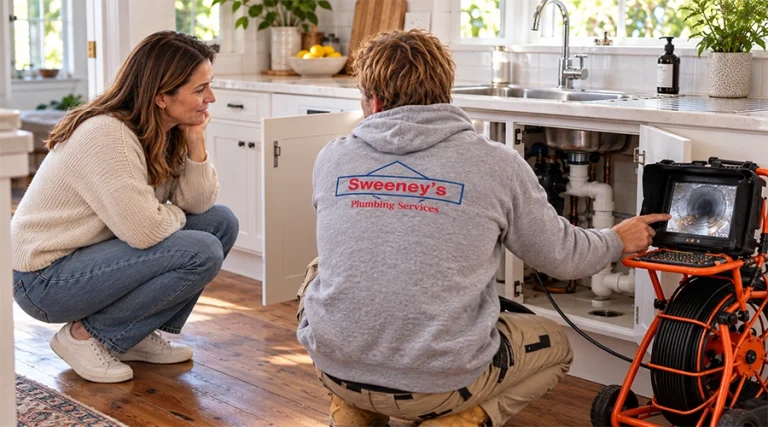
Sweeneys Plumbing brings over 26 years of experience diagnosing and resolving all types of water pressure problems North Shore and Hills District residents encounter. Our licensed plumbers use advanced diagnostic equipment to identify the root causes of pressure issues, whether they stem from internal plumbing problems or external supply factors.
We provide comprehensive solutions including pressure regulator testing and replacement, leak detection services, pipe repairs and replacements, fixture upgrades, and whole-system pressure balancing. Our service areas include Castle Hill, Baulkham Hills, Kellyville, Pennant Hills, Carlingford, Epping, and surrounding suburbs across the North Shore and Hills District.
Pressure faults are one of the cheaper problems to diagnose and one of the more expensive to ignore, because constant high pressure quietly shortens the life of every tap, valve and appliance connected to it. A gauge reading takes minutes, and it tells you whether the fix is a $200 valve or a conversation about the pipework.
If the shower has faded over a few years, or the taps have started hammering when they shut, get in touch or call the office on 1800 219 682. Where a pipe has already let go, ring the mobile on 0418 211 977 instead, and we’ll talk you through shutting the water off while we’re on the way. Repairs cover leaking taps and their replacements through to whole-system pressure balancing, with a free estimate before anything starts.