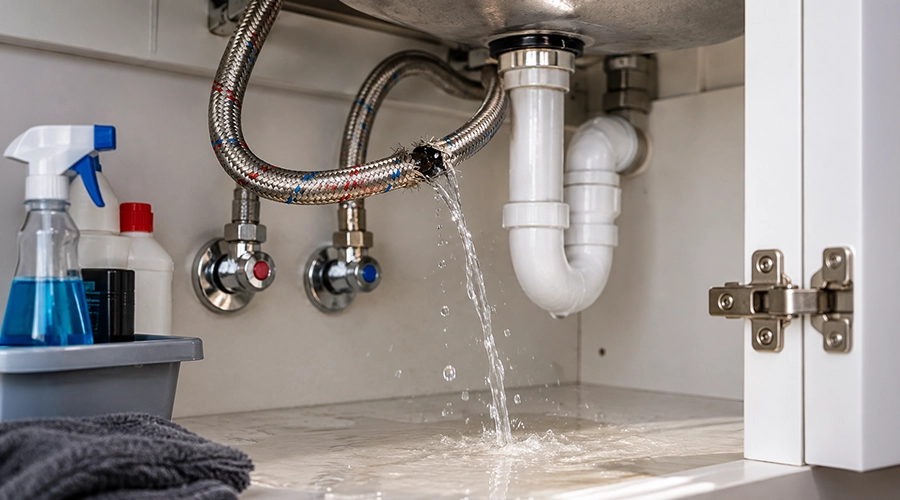
A burst flexi hose does not drip. It pushes mains water into the cupboard at full pressure. Nothing stops it until somebody shuts the water off.
Most people have never looked at one. Flexi hoses sit out of sight under sinks and vanities. That is exactly why they do so much damage before anyone notices. Suncorp reported in May 2026 that one in ten home insurance claims in 2025 came from flexi hose failures. Average claim cost reached $30,000. Six per cent of claims topped $100,000, and 60 per cent of homeowners had never had their connections inspected.
What is a flexi hose, and where are they in the house?
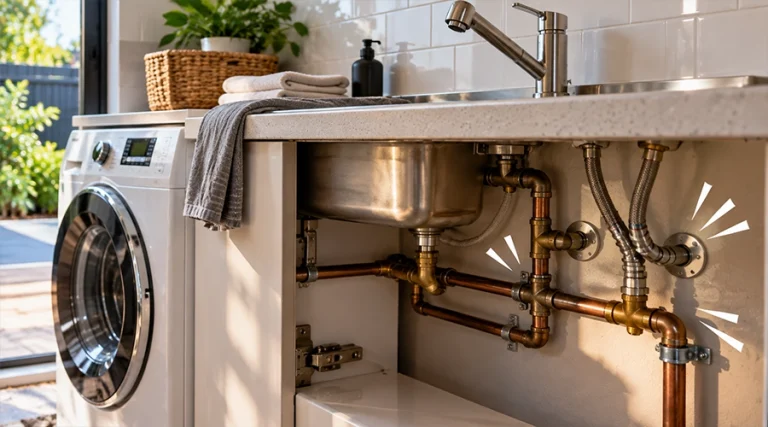
A flexi hose is a short rubber hose inside a braided stainless steel sleeve. It carries water from the wall or floor connection across to a tap, a toilet cistern or an appliance.
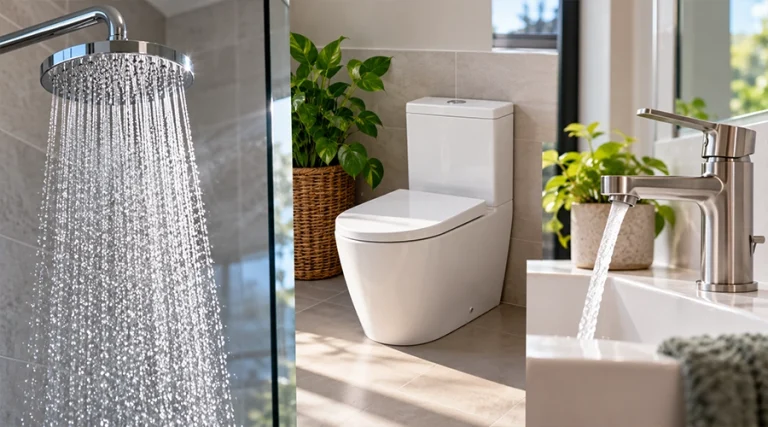
Most homes have several. A pair usually sits under the kitchen sink, one hot and one cold, with another pair under each bathroom vanity. More run to the laundry tub, behind the toilet, and out to the dishwasher. Every one of them holds mains pressure all day, every day.
What should someone do in the first five minutes?
Stop the water first, then stop it spreading. Everything else can wait.
- Turn off the isolation tap under the sink or vanity if the cupboard has one
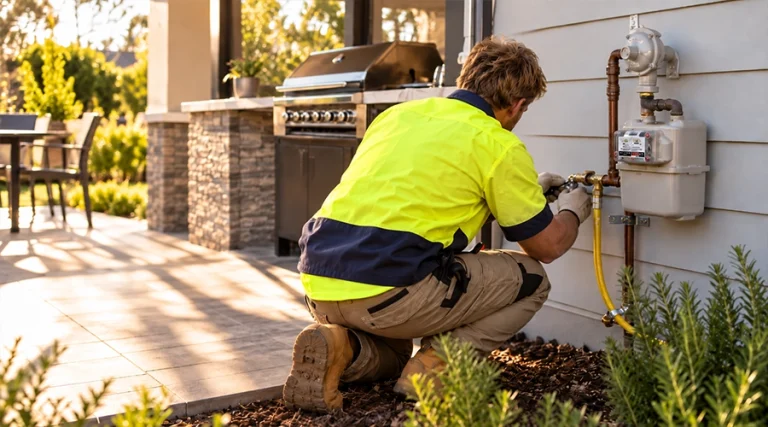
- If it does not, turn off the main tap at the water meter, which usually sits near the front boundary
- Switch off the hot water system if the hot side has let go
- Stay clear of power points, leads and appliances the water has reached
- Call an electrician or 000 if there is any doubt about safety
- Lift what you can off the floor, then call a plumber
Sydney Water explains where to find the meter and how to use it to check for leaks. Worth reading before anything goes wrong, rather than during. The same goes for knowing what to do in the moments after a pipe lets go.
What causes a burst flexi hose?
Corrosion and installation damage account for most failures. Suncorp names corrosion, rust and a hose that was twisted or kinked when it went in.
The cupboard itself does not help. Cleaning products leak fumes. A damp cabinet under a slow dripping waste keeps the braid wet. Both work on the steel over time.
Water pressure adds to the load. Sydney Water runs a pressure management program for exactly this reason, noting that high pressure leads to breaks in water pipes and leaks across its system. Its operating licence sets a minimum of 15 metres head at the point of connection, while the network average sits at 52 and some properties receive more than 100. A pressure limiting valve, the fitting near the meter that holds incoming pressure down, takes that strain off every fitting in the house. Plenty of older homes never had one, or have one that stopped working years ago, which shows up as pressure that sits too high at every tap.
Lifespan varies more than people expect. Suncorp notes that some hoses run for 20 years without trouble while others corrode and fail much sooner. Age alone tells nobody very much.
How often should flexi hoses be checked?
Twice a year is the figure Suncorp puts forward, and it takes about two minutes per cupboard. Given how many homeowners have never checked at all, even once a year would be an improvement.
What does a failing hose look like?
- Rust spots or brown staining on the braid
- Frayed strands, or wire that has lifted away from the surface
- A bulge anywhere along the hose
- A kink, a sharp bend, or a hose pulled tight between fittings
- A hose resting hard against the back of the cabinet or against a waste pipe
- Damp at either end, or a white crust around a fitting
Any one of those is a reason to replace the hose rather than watch it.
Can a homeowner replace one themselves?
Better not to. Sydney Water points out that a homeowner may legally do only minor work, such as changing a tap washer. Anything connecting to the water supply sits outside that.
There is a practical reason too. Swapping the hose is the easy part. A plumber also checks the isolation tap actually shuts off. The replacement has to be rated for the job. The hose should run in a gentle curve rather than a tight bend. Water pressure matters as well, because high pressure shortens the life of the next one. Sweeney’s Plumbing handles this as part of sink, basin and vanity work, and carries common parts on the van.
Who is responsible in a rental or a strata unit?
The landlord is responsible in a rental, and the tenant has to report it straight away. NSW lists a burst water service as an urgent repair, alongside gas leaks, flooding and serious roof leaks. Urgent means it cannot sit in a queue behind ordinary maintenance.
Strata is less clear cut. Whether a hose counts as part of the lot or part of common property depends on the scheme. Owners corporation records settle it. What is not in question is speed. In the unit blocks around Chatswood and Lane Cove, a kitchen leak reaches two or three homes below within minutes, which is why work in strata buildings gets booked differently from a house call.
A burst flexi hose is one of the few plumbing failures where the first two minutes matter most. What happens before the plumber arrives decides the damage. Knowing where the meter tap is covers most of it. Having a number to ring once the water is off covers the rest. Sweeney’s Plumbing answers callouts around the clock across the North Shore from its Turramurra office. For a flooded cupboard right now, call 0418 211 977. To have the hoses checked before one of them picks the moment, get in touch.