A blocked drain at home is annoying. In a café, a medical suite or a strata block, it closes toilets, stops trade and puts a queue of unhappy people in front of whoever manages the building. Commercial drain maintenance in the Hills District runs on a cycle for that reason. The aim is to find the problem on a quiet Tuesday rather than during Saturday service.
Why do commercial drains need a schedule when houses get by without one?
Because they carry far more, far more often. One household sends a few hundred litres a day down a single line. A food court, a gym or a thirty unit block pushes that much through a shared pipe before lunch. Wear that would take a house twenty years takes a busy site two or three.
What goes down is different too. Kitchen lines carry fats and oils that cool and set hard on the pipe wall. Bathrooms in public buildings collect paper towel, wipes and whatever else ends up in the pan. Each layer narrows the pipe a little more until flow stops altogether.
What does a grease trap have to do with the drain?
It protects everything downstream of it. A grease trap is the tank that catches fats, oils and solids before they reach the sewer. Sydney Water requires most retail food businesses to fit a correctly sized trap, to drain to it by gravity and to keep it cleaned on a regular cycle. A trap that is overdue stops holding, and the fat moves straight into the line the whole centre shares. More on how often a kitchen trap needs pumping out.
Who pays when the line is shared?
It depends on whether the fault sits in common property or inside one tenancy. In strata, the owners corporation carries a legal duty to repair and maintain common property, and NSW Fair Trading now holds investigative and enforcement powers to back that duty up, as the guide to the current strata law changes explains. In a commercial lease the split sits in the lease rather than the legislation, so the maintenance clause is worth reading before the invoice turns up.
What does a commercial drain maintenance cycle include?
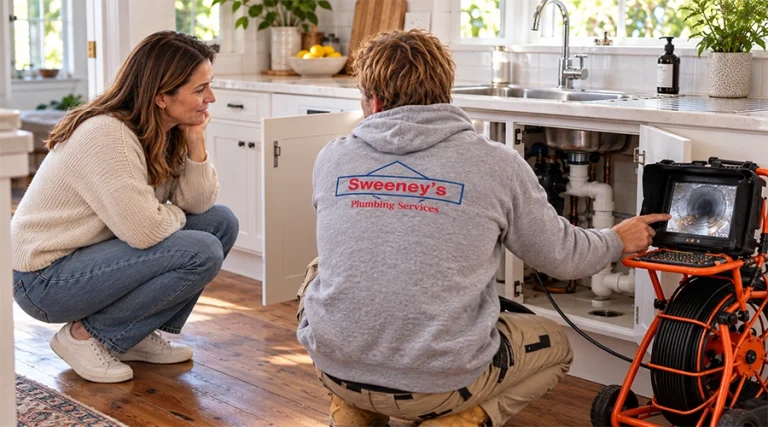
Three steps, in this order: look, clean, then look again. A camera survey of the line records its condition before anything touches it, showing root intrusion, scale, sagging sections and cracks. Cleaning follows. Water jetting cuts roots and strips hardened fat back to the pipe wall, which a plunger or a rod cannot do. The second camera run proves the line is clear and shows whether the pipe underneath is sound.
Skipping the first step is the usual mistake. Without a baseline, nobody can say whether a site is improving or quietly getting worse.
How often should the cycle run?
Often enough that the line never reaches the point of blocking, which is a different interval for every building. A site with hot food preparation needs the shortest gap between visits. A quiet office suite with a staff kitchenette can go much longer. The honest answer comes from the first two camera runs, because the rate of build up is visible between them.
What pulls the next visit forward?
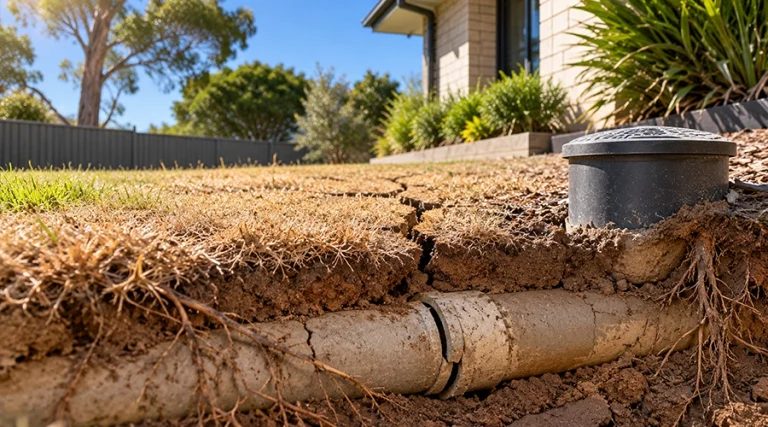
Four things show up again and again. Hot food cooked on site, mature trees sitting over the line, earthenware pipework (the brittle older clay pipe laid in short lengths with sealed joints) and a history of blockages in the same section. Any one of them shortens the interval.
Why does access decide so much of the cost?
Because a plumber has to reach the drain before doing anything to it. The inspection opening is the capped access point on the line, and Building Commission NSW publishes requirements covering those openings. Plenty of commercial sites have paved, landscaped or parked over theirs. Finding one again turns a short visit into a long one, so any plan is worth starting with a map of where the access points sit.
What should a property manager ask for before signing the work off?
Footage, a written report and a scope that names the sections cleaned. Vague invoices undo a maintenance program, because the next contractor has nothing to measure against.
Two other things are worth checking. High pressure jetting is genuinely hazardous work, and Safe Work Australia sets out the controls a competent operator should have in place in its guide to managing the risks of water jetting. The second is cover. Sweeney’s Plumbing is fully insured and OH&S compliant to WorkCover requirements, which matters when the work happens in a tenanted building during trading hours.
Sweeney’s Plumbing handles commercial plumbing work and buildings under facility management across Norwest, Castle Hill and the surrounding Hills suburbs, with free cost estimates approved before any work starts. If the drains at a site have only ever been cleared after they blocked, a baseline camera run is the sensible first job. Send the site details through the contact page or ring the office on 1800 219 682 to map out a cycle that suits the building.