A gurgling drain is one of the few plumbing noises that tells you something useful. It is the sound of air dragging through water because the system cannot get air the normal way. On the North Shore it usually traces back to one of two things. Either a vent is not doing its job, or a partial blockage sits further down the line.
Neither needs to be an emergency yet. Both get worse if nobody looks.
What does a gurgling drain actually mean?
Air is finding the wrong path. Every sanitary drain needs air behind the water so the flow can move freely. A jerry can glugs the same way until you loosen the second cap. When something restricts the usual air supply, the water pulls air back through the nearest trap. The trap gurgles on the way.
That is why the noise often comes from a fixture nobody is using. Flush an upstairs toilet and the downstairs floor waste burps. The sound appears at the weak point, not at the fault.
Why does a gurgling drain on the North Shore get worse after rain?
Because the network has more water in it and less room for air. Sydney Water notes that heavy rain can overwhelm the wastewater system. Its page on wastewater blockages lists tree roots, wet wipes and hardened fats as the other main causes.
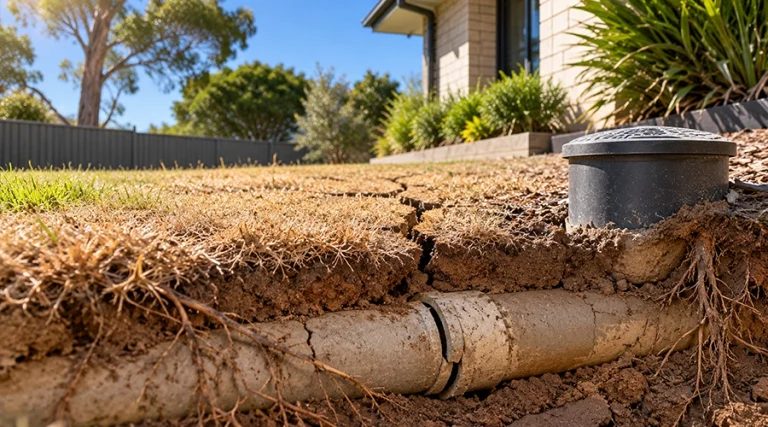
Older North Shore suburbs make this worse in a specific way. Mature street trees and large private gardens sit directly above sewer lines laid decades ago. Roots find the small cracks, grow and slow the flow without blocking it outright. A slow line gurgles long before it backs up, which is the useful part. More on what usually puts a line out of action.
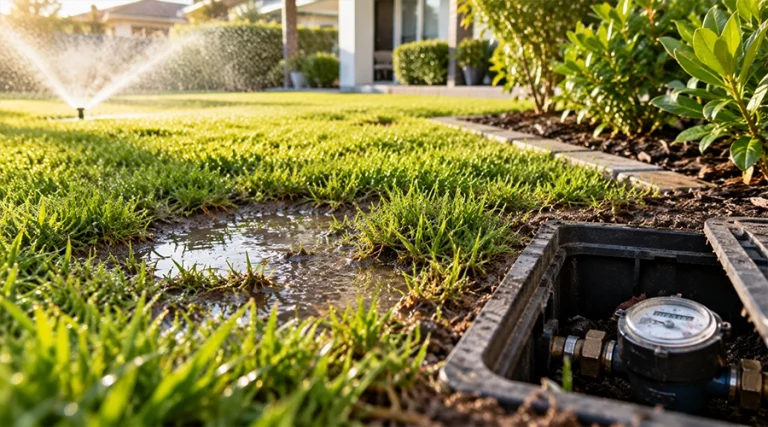
Stormwater adds a second possibility on sloping blocks. Say the gurgle only happens during downpours and the fixtures behave the rest of the time. The problem may sit in how stormwater leaves the property rather than in the sewer at all.
Which fixture is gurgling, and why does that matter?
The location narrows the fault to a section of pipe. A single basin that gurgles on its own points to that branch. A shower, a floor waste and a toilet all gurgling together point to the main line they share.
Note which fixtures do it and what you were running at the time. That detail saves a plumber a lot of guessing. It also decides whether a camera needs to go down the line or whether the fix sits above the floor.
What is an air admittance valve, and can it fail?
It is a one-way valve that lets air into the pipework without letting smell out. It stands in for a vent stack running up through the roof. Building Commission NSW publishes guidance on the correct use and installation of these valves. They do fail, and when they do the symptom is almost always a gurgle.
Where are air admittance valves allowed?
Not everywhere, and not as a blanket substitute for proper venting. The valve has to sit where air can actually reach it, which rules out a sealed cupboard or a buried position. Plenty of renovation work puts one behind a vanity with no airflow. The fixture then gurgles from the day the bathroom opens.
What happens when one sticks shut?
The pipework starts pulling air through traps instead. Dust clogs the valve. Years in a hot roof space can seize one so it no longer opens at the pressure it should. Replacing it is a small job. Finding it is the harder half, because it may sit in a roof cavity, a wall or under a bench.
When does a gurgle mean a blockage rather than a vent?
When the water also drains slowly, or when more than one fixture joins in. A venting fault makes noise but does not usually slow the flow. A partial blockage does both.
One warning sign is worth knowing. The overflow relief gully is the grated riser in the garden that releases a sewer surcharge outside instead of through the shower. Building Commission NSW sets clearances for it. Its note on the clearances for overflow relief gullies calls for at least 150 mm between the top of the riser and the lowest fixture on the drain. The riser also has to finish at least 75 mm above the surrounding surface. If water appears at that grate, the line is already surcharging and the gurgle has had its say.
Access matters here too. Building Commission NSW expects an inspection opening to finish at ground or floor surface level, as its note on inspection openings explains. A buried or paved-over opening turns a thirty minute clear into a much longer visit.
What should a North Shore homeowner do first?
Run the taps and listen, then write down which fixture gurgles and when. Avoid pouring a caustic drain product in. It will not touch roots or a stuck valve, and it makes the line less pleasant to work on.
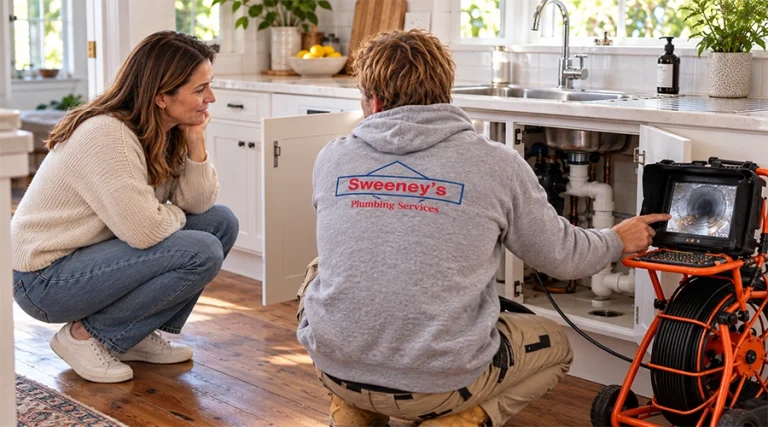
From there a plumber can tell the difference quickly. A camera run shows roots, cracks and bellies in the pipe. High pressure water jetting clears what is in the way. A second camera run afterwards shows whether the pipe needs repair or just ongoing maintenance.
A gurgle is a warning you get for free, so it is worth using. Sweeney’s Plumbing works across the suburbs north of the harbour. One visit is usually enough to separate a failed valve from a root intrusion or a line that has started to collapse. Send the details through the contact page, or ring 0418 211 977 if water has already reached the gully grate.