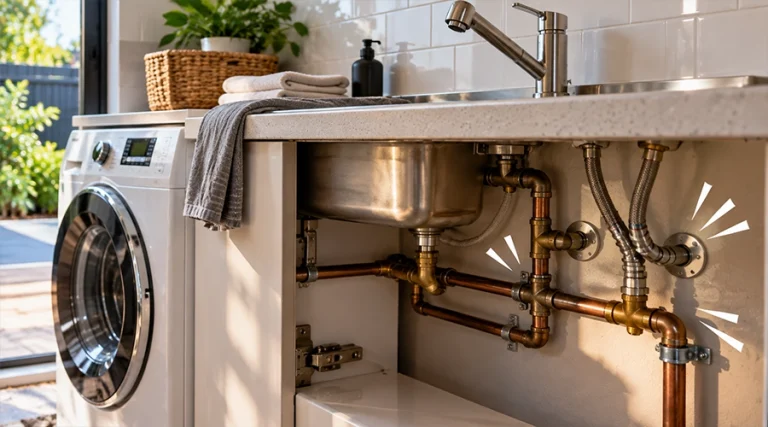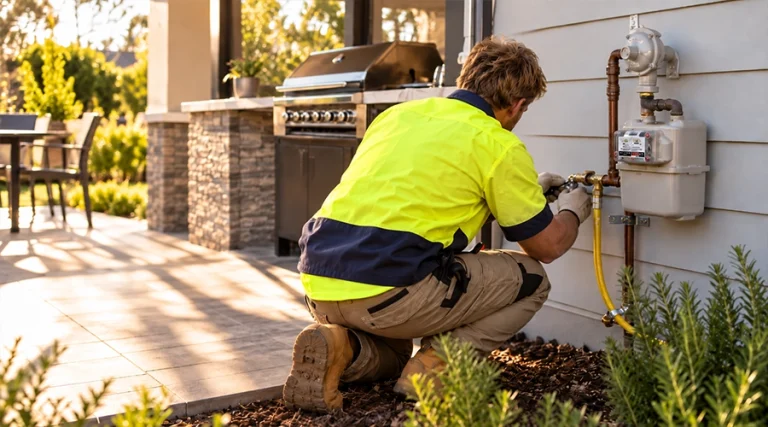
Losing hot water halfway through a shower is the kind of fault nobody schedules around. Most systems give warning first, though, and the warnings are easy to miss. Hot water repairs North Shore households need usually trace back to one of four faults. Three of the four are cheaper to fix early.
Why has the hot water stopped?
Because a component has failed, not because the system has reached the end of its life. That distinction matters, since most of the parts that fail are replaceable.
Why is there no hot water at all?
A failed thermostat or heating element on an electric unit, or a pilot or ignition fault on a gas one. Check the switchboard and the gas supply first. A tripped circuit or an empty LPG bottle costs nothing to rule out. Beyond that it is a job for a licensed plumber.
Why does the temperature keep changing?
Usually the tempering valve, or sediment sitting on the element. A tempering valve blends hot and cold to a set delivery temperature, and it drifts as it wears. NSW sets installation requirements for temperature control devices on heated water services. Replacement is not a swap-in-anything job.
Why is the tank leaking?
Corrosion, a failed relief valve, or a fitting that has worked loose. A steady drip from the relief valve drain line is normal on a hot cycle. Water pooling under the tank is not, and a rusted seam means the tank itself has gone. Advisory guidance for heat pump and storage installs also covers the relief drain. It has to fall continuously to its discharge point and terminate 75 to 300 mm above a drainage fixture. A drain that runs uphill or ends in the wrong place is worth checking. A unit venting steam rather than dripping is a call to make straight away.
What are the banging and popping noises?
Sediment. Mineral deposits settle on the bottom of a storage tank, and water trapped underneath boils and escapes through them. It sounds alarming and it is mostly a warning. Sediment also makes the element work harder, which shortens its life.
Does the system type change the repair? Electric, Gas & Solar?
It changes the parts, not the approach. Electric storage units fail at the element and the thermostat. Gas units fail at the ignition, the thermocouple and the gas valve. Solar systems add a circulating pump, a controller and roof collectors to the list. A solar fault often sits in the boosting element rather than the panels. Sweeney’s carries common parts, so a good share of repairs finish on the first visit.
Is it worth repairing or replacing?
Repair is usually the better call under about ten years, and replacement above it. Age is a rule of thumb rather than a rule. The stronger signals are a rusted tank and a second major failure within a year. So is a unit old enough that parts are no longer made. A replacement is also the moment to reconsider the type, since a heat pump or solar unit changes running costs.
How do you make a hot water system last?
Service it once a year and act on small faults. A yearly check covers the relief valve, the tempering valve, the anode where the unit has one, and the connections. Keep an eye on the water bill as well. Sydney Water’s meter test finds a hidden leak in an hour, and a hot water leak costs twice over, because you pay to heat the water you lose.
Who should you call for hot water repairs on the North Shore?
A licensed plumber who can price a repair against a replacement honestly. Sweeney’s Plumbing has worked on North Shore hot water for years, on electric, gas and solar. The team gives a free estimate before starting. Gas storage and continuous flow units, gas appliance work and 24 hour callouts all sit alongside it across the North Shore. Where the gas side needs attention, a licensed gas fitter has to do that part.
No hot water this morning? Call the office on 1800 219 682. Or send the make and age of the unit through the contact page and we will tell you what is likely behind it.