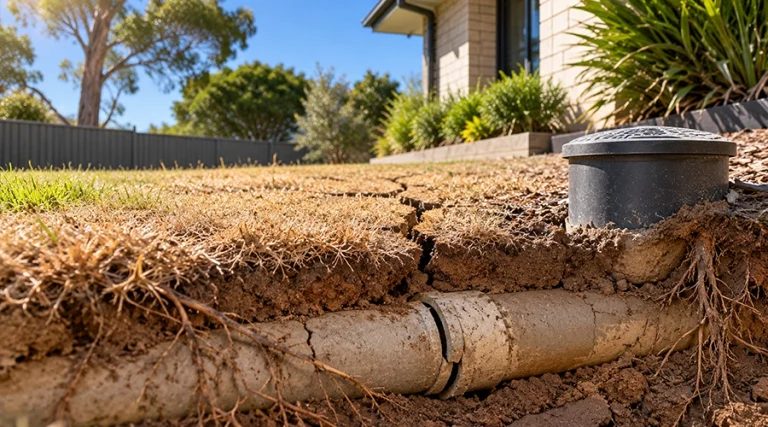
Most Sydney houses have a round grate sitting in the garden, usually close to the bathroom or laundry wall. It stands slightly proud of the soil. That is the overflow relief gully, and it has one job. When the sewer backs up, it releases the waste water onto the ground outside. That keeps the overflow out of the shower drain inside.
Nobody thinks about it until the day it matters. By then its height and its condition decide how expensive the morning becomes.
How does an overflow relief gully protect the house?
By giving the drain an easier way out than the fixtures indoors. Water takes the lowest opening it can find. When a blockage sits downstream, pressure builds behind it and the level in the drain climbs. The grate in the garden sits lower than the floor waste in the bathroom. So the overflow lifts that grate and spills outside.
Hose off a lawn and the job is done. Lift carpet, underlay and skirting instead, and the same blockage turns into a restoration bill.
What causes the surcharge in the first place?
Either a blockage in the line, or a network that is temporarily full. Sydney Water names tree roots, wet wipes and hardened fats as the main causes on its page covering wastewater blockages. The same page notes that heavy rain can overwhelm the wastewater system.
Both are common on the North Shore. Mature street trees and deep gardens sit above sewer lines laid generations ago, and the roots find every hairline crack. Storms then arrive and fill whatever room the pipe has left.
What heights does it have to sit at?
Two measurements, and both come from AS/NZS 3500.2:2026. Building Commission NSW sets them out plainly in a 2026 advisory note on those clearances.
Clause 4.6.6.6 sets a minimum of 150 mm. That gap runs between the top of the riser and the lowest fixture on the drain. Clause 4.6.6.7 sets a second minimum of 75 mm. That one runs between the top of the riser and the finished surface level. A riser in a path or paved area is the exception. There it has to finish at a level that stops water ponding and getting in.
The note exists because inspectors keep finding installations that miss those clearances. Building Commission NSW is direct about the consequence. A riser that misses those heights can let a surcharge cause significant property damage.
What happens when a site cannot meet those heights?
A reflux valve goes in instead. A reflux valve is a one way flap in the drain. It lets flow run out and stops it coming back. The same note allows this under clause 4.5.2. One limit comes with it, from the NSW variation to the Plumbing Code. No sanitary plumbing waste stack may sit upstream of the valve. Building Commission NSW covers the detail in a separate note on reflux valve installation requirements.
Why does landscaping cause so many of the problems?
Because the clearances run from the finished ground, and landscaping changes that ground. A new path, a raised garden bed or fresh turf all lift the surface around the riser. So does a deck across the side passage. Building Commission NSW asks practitioners to allow for exactly that. Paths and landscaping added later can wreck a compliant installation.
A grate buried under pavers still does its job in the mechanical sense. It releases under the paving, into the subfloor or against the brickwork, with nobody standing there to see it. The warning the system exists to give never arrives.
Three habits undo a perfectly good installation. Topping up garden beds against the house year after year. Paving flush over the riser instead of grading away from it. Standing a pot or a bin lid on the grate to tidy up the look of the yard.
How can a homeowner check one?
Walk down the side of the house and find it first. Start with the grate itself. It should stand clear of the soil rather than sit level with it or below it. Move anything stacked on top of it. Look for silicone or concrete around the rim too, because a grate that cannot lift cannot release. Then compare its level with the floor waste inside the nearest bathroom. Last, check the ground around it for the pale crust or dried paper that shows water has come out before.
Anything uncertain in that list is a measurement question, and a licensed plumber can settle it in a few minutes. Only licensed work is legal here in any case, which is worth knowing before accepting the cheapest quote. More on how to confirm someone holds the right ticket.
What should happen if water has already appeared at the grate?
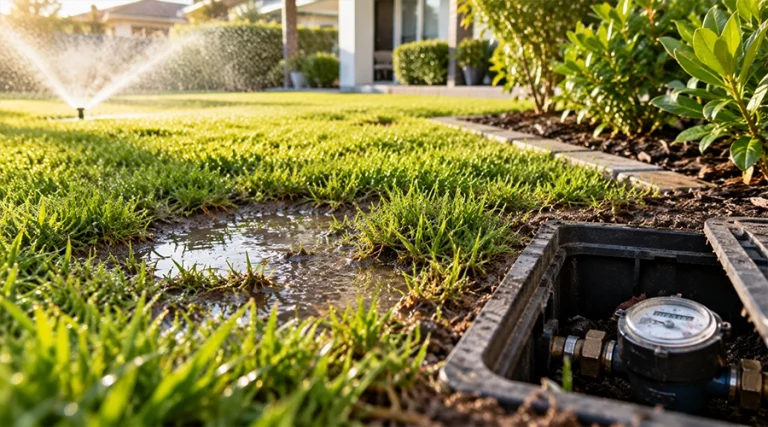
Treat it as a blocked line rather than a one off. The grate did its job, which means the drain surcharged. A drain that surcharges once will do it again in the same conditions.
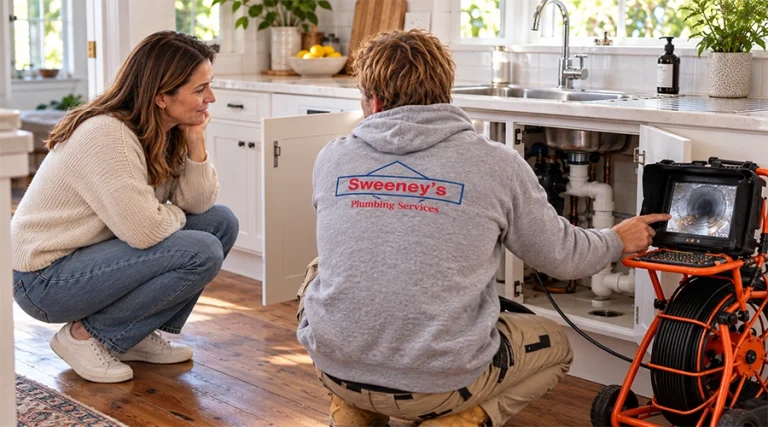
The sequence from there is simple. Clearing the wastewater line restores flow. A camera run down the pipe shows what caused it and where. Roots in a cracked section raise the question of what happens when a line has collapsed rather than blocked. A clean line with no visible fault usually points at the network rather than the property. Sydney Water sets out which sections it repairs and which fall to the owner.
Sweeney’s Plumbing works across the North Shore and takes calls around the clock. Sewer surcharges rarely wait for business hours. Send the details through the contact page to book an inspection. Ring 0418 211 977 instead if water is at the grate right now.