A running, leaking or blocked toilet is one of the most common reasons Hills District homes call a plumber. It rarely fixes itself. Sydney Water measures a constantly running toilet in thousands of litres a day. The first sign is usually the bill, not the noise. Sweeney’s Plumbing covers toilet repairs Hills District wide. Most faults come down to a worn inlet valve, a failed outlet seal or a blockage further down the line. One visit usually sorts it.
Why does a toilet keep running after it flushes?
Nine times out of ten, the inlet valve or the outlet seal has stopped sealing. Either the inlet valve will not shut off, so water trickles into the cistern. Or the outlet washer has perished, so water escapes into the pan. Both parts are small. Both cost little to replace. Left alone, both waste water around the clock.
How can you tell which one is leaking?
Put a few drops of food colouring in the cistern and leave it half an hour without flushing. Colour in the pan means the outlet seal has gone. A cistern that refills on its own without anyone touching it points to the inlet valve instead.
How much water does a running toilet actually waste?
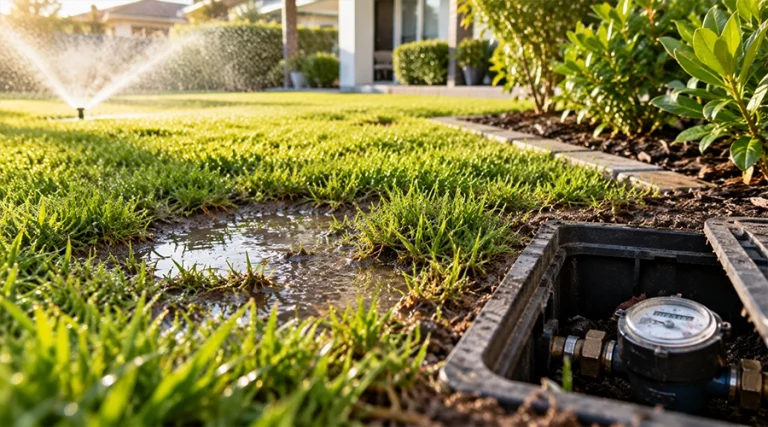
Enough to show up on a quarterly bill. Sydney Water’s guidance on finding household leaks puts a slow dripping tap at a few litres an hour. A constantly running toilet runs into thousands of litres a day. Its meter test settles the question. Turn off every tap and water-using appliance, then write down the meter reading. Leave it an hour without using water and read it again. A changed reading means water is escaping somewhere.
What actually blocks a toilet?
Things that were never meant to go down it. Sydney Water clears up to 20,000 blockages a year across its wastewater network at a cost of around $27 million, and non-flushable wet wipes are involved in 75% of them, as stated by Sydney Water. Paper towel, tissues, cotton buds and hair account for most of the rest. Sydney Water’s rule is worth repeating to anyone who will listen: only the three Ps belong in a toilet, meaning pee, poo and toilet paper.
Why does the same toilet block again and again?
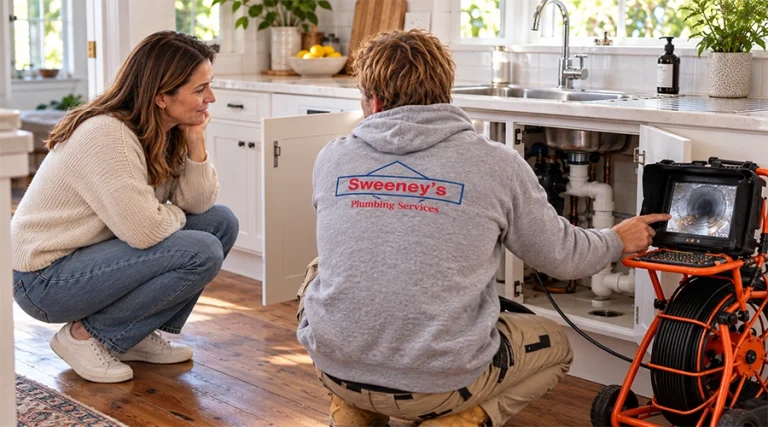
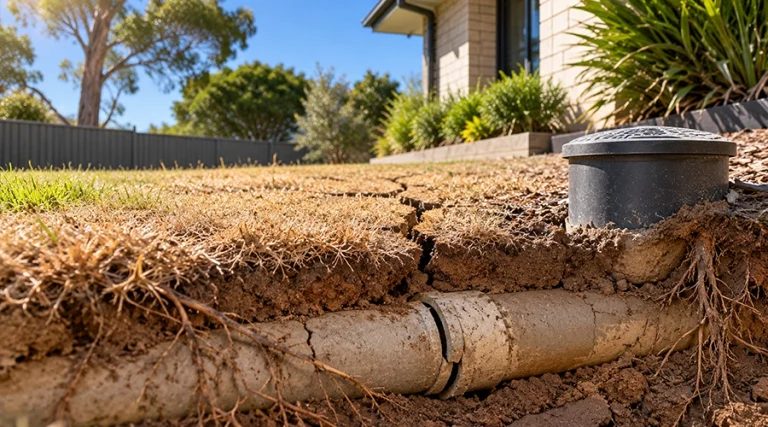
Because the problem usually sits past the toilet. A pan that clears, then blocks again within weeks, points to the drain line. In older Hills District homes that often means tree roots in the joints of clay pipework. Sydney Water names more than forty tree species to keep at least six metres from a wastewater pipe. Plenty of them grow in established gardens around Dural, Glenorie and Kenthurst. A camera run down the line settles it. Our rundown of what a drain camera survey shows covers what to expect. Where the pipe has cracked rather than blocked, repairing the section from inside saves digging up the yard.
Is a blocked toilet an emergency?
In a rental property it is, by law. NSW Fair Trading lists a blocked or broken toilet as an urgent repair, alongside a burst water service and a failure of the hot water supply, which means a landlord or agent has to arrange the fix promptly rather than slot it into next week. In an owner-occupied home it comes down to whether there is a second toilet. One toilet and a blockage that will not shift is worth a call straight away on 0418 211 977, and Sweeney’s Plumbing takes after-hours repair calls every day of the year.
What happens on a toilet repair callout?
Toilet repairs across the Hills District start with one question: does the fault sit in the toilet or in the drain? That answer decides everything after it. A cistern fault shows up at the toilet, usually within a minute of lifting the lid. A drain fault needs the line checked past the pan. Once the cause is clear, you get the options and the price before anything comes apart. All Sweeney’s plumbers hold full qualifications, and the business carries full insurance. That counts for something when someone lifts a toilet off its seal on a tiled floor.
What does waiting actually cost?
More than the repair, nearly always. A leak at the base seeps under vinyl and into particleboard flooring, where it stays invisible until the floor starts to move. A running cistern adds to every quarterly bill until someone stops it. A partial blockage becomes a full one, usually at the worst possible moment. Jobs we get called to most often include:
- Cisterns that refill slowly or not at all
- Water pooling around the base after each flush
- Toilets that rock because the fixings or the floor flange have failed
- Weak or incomplete flushes
- Blocked pans that clear, then block again a fortnight later
Is it worth repairing an old toilet or replacing it?
Repair wins in most cases, because the parts that fail are the cheap ones and the pan itself rarely does. Replacement makes more sense when the cistern is cracked, when the suite is an old single-flush model, or when parts for it are no longer made. A modern dual-flush suite uses a fraction of the water of a single-flush toilet, so on a busy family bathroom the swap often pays for itself over a few years. Toilet installation and clearing a blocked pan are both part of what Sweeney’s does across the Hills District, along with drain maintenance and repair when the fault turns out to sit past the toilet altogether.
Get the toilet working properly again
Book a plumber who will tell you whether it is a two dollar washer or a drain problem before starting work. Call Sweeney’s Plumbing on 1800 219 682 during office hours, or send the details through the contact page for a free estimate on a repair or a new suite.