A wet patch on the ceiling below the bathroom usually means the shower is losing water. So does grout that never quite dries. A leaking shower North Shore homeowners notice downstairs has almost always been going for months by then. Finding the source is the whole job. Replacing tiles or resealing a screen without knowing where the water escapes tends to move the problem rather than end it.
Where does a leaking shower usually start?
In one of three places. The waterproofing membrane, the shower floor waste, or the tap and mixer bodies behind the wall. Each leaves a different signature. Membrane failure shows as damp spreading through the wall or floor beside the shower. A failed waste connection drips straight down, so the stain sits directly under the base. A leak at the tap body often only appears while the shower runs. It can also track a long way along a bearer before it drops.
Is it waterproofing or plumbing?
Waterproofing, more often than not, though the two overlap. The National Construction Code’s wet area provisions require shower walls to be waterproofed to not less than 1800 mm above the floor substrate. The floor has to be graded to the waste on a fall between 1:80 and 1:50. A bathroom built before those provisions holds water against the junctions until it finds a path through. So does one where the fall runs the wrong way. A plumber can tell which side of the line the fault sits on, which decides whether the fix is a repair or a rebuild.
How do you know it is the shower and not a pipe?
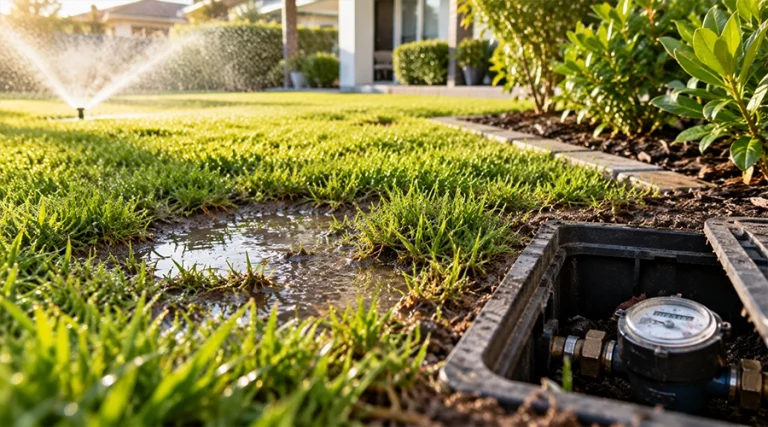
Shut the shower off and watch the meter. Sydney Water’s leak test works here. Turn off every tap and water-using appliance, then note the meter reading. Leave it an hour without using water and read it again. Movement means water is escaping from a pressurised pipe somewhere on the property. No movement, but damp that worsens after every shower, points at the shower itself.
What are the signs worth acting on early?
Anything that keeps coming back after you clean it. Watch for paint bubbling on the far side of the shower wall, skirting boards lifting, and a musty smell in the room below. Grout and silicone that stay dark for days count too, as do tiles that sound hollow when tapped. Timber framing and particleboard flooring both swell before they rot. A floor that has started to feel soft near the shower is well past the early stage.
Who should you call about a leaking shower on the North Shore?
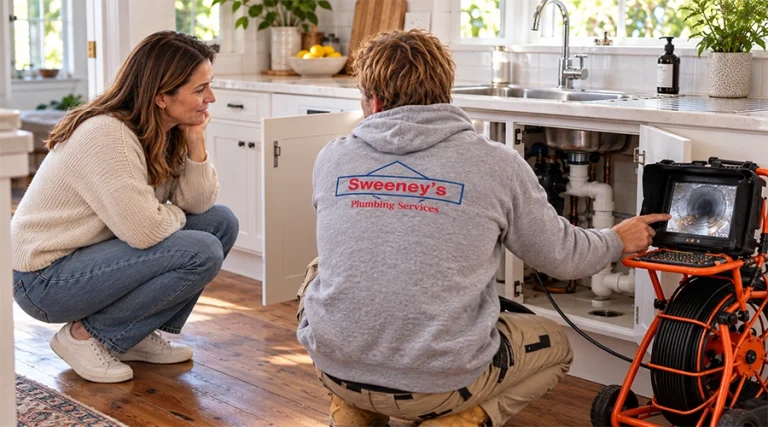
A licensed plumber, and sooner rather than later. Building Commission NSW requires a licence for any plumbing work in NSW, regardless of what the job costs. A shower leak is not a job for a general handyman. Sweeney’s Plumbing traces the source first and prices the repair second. That way you find out whether it is a waste connection, a tap body or the membrane before committing to anything. Where the room needs more than a repair, bathroom renovation plumbing is part of the same service, alongside bathroom repairs and tap and mixer work across the North Shore. Where the damp only appears with the hot tap running, the hot water line is the first suspect.
Call Sweeney’s Plumbing on 1800 219 682. Or send a photo of the stain through the contact page and we will tell you what sits behind it.