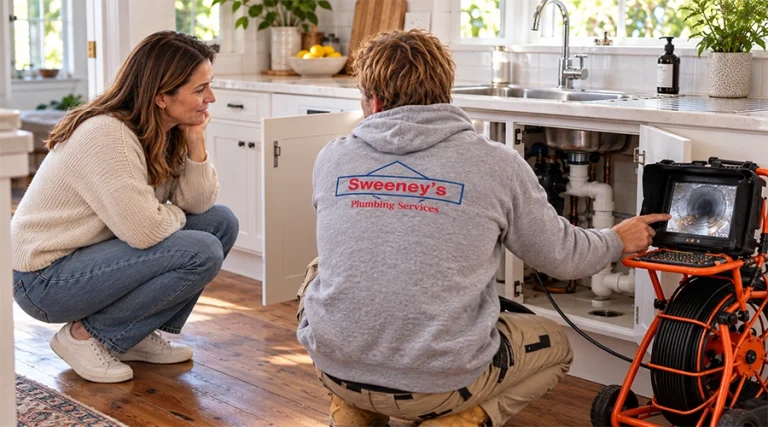
Plumbing in a strata building is rarely just a plumbing problem. A leak in one unit raises three questions at once: who pays, who approves the work and who lets the plumber in. None of that gets easier while water is still running. Sweeney’s Plumbing has handled the strata plumbing North Shore buildings need for years, working directly with strata managers and committees. Approvals move faster and jobs finish without three rounds of emails.
Who pays for a plumbing repair in a strata building?
It depends on where the pipe sits, not on whose unit the water appears in. NSW Fair Trading’s guidance on strata repairs and maintenance draws the line plainly. The owners corporation looks after plumbing in boundary walls and under the floor. It also covers the roof, gutters, boundary walls and the slab. The lot owner looks after plumbing in internal walls, plus the fixtures themselves: baths, toilets, sinks and showers.
So why does it still cause arguments?
Because water travels. A ceiling stain in unit 4 can start at a failed shower seal in unit 8, which is a lot owner’s problem. It can just as easily start at a cracked stack between them, which is not. Until someone finds the source, both sides are guessing. A plumber who identifies the source first saves a great deal of back and forth.
What should a committee check before approving work?
The strata plan and the scheme’s own by-laws, because schemes differ. NSW Fair Trading’s strata living guide covers how common property works, who handles repairs and maintenance, and how to settle a disagreement.
What goes wrong most often in North Shore strata buildings?
Shared lines, ageing stacks and hot water. Plenty of blocks through Chatswood, Gordon and Wahroonga went up when cast iron and galvanised pipe were standard, and both corrode from the inside until flow drops off or a joint lets go. Callouts cluster around a short list:
- Sewer stacks backing up into ground floor units
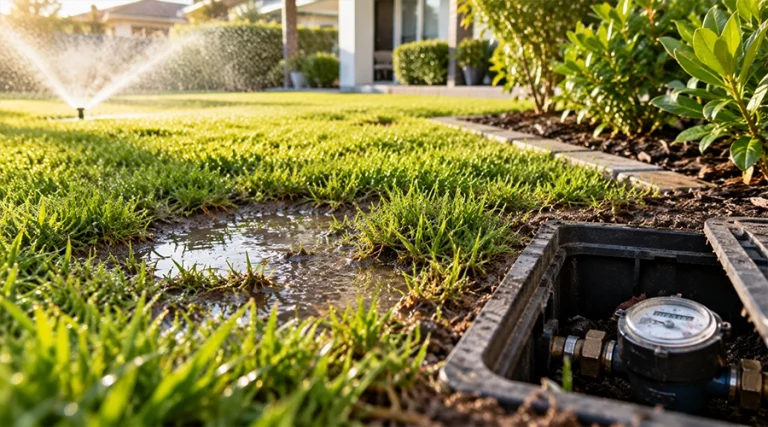
- Stormwater pits and downpipes overflowing in heavy rain
- A central hot water plant failing and leaving a whole block cold
- Slow leaks inside boundary walls surfacing two units away
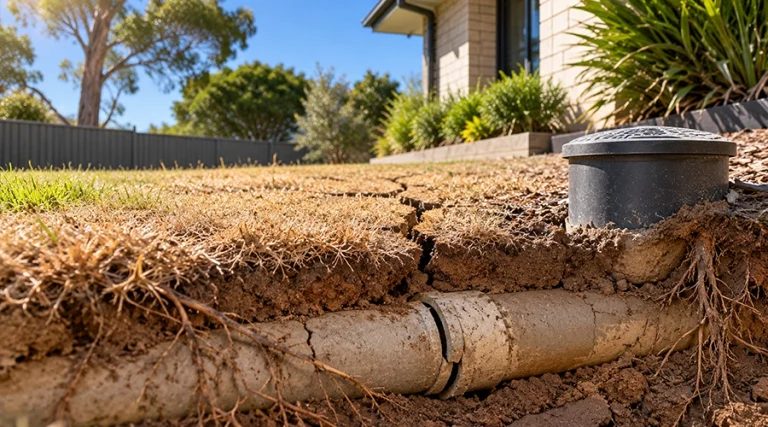
- Tree roots in the common drainage line
Responsibility for the pipework outside the building runs on the same logic. Sydney Water’s guide to who repairs what sets out where its network ends and the property’s own pipes begin, which in a strata scheme puts that stretch with the owners corporation.
Because a blockage in a shared line affects everybody at once, clearing it properly matters more than clearing it fast. Where a camera shows cracked or root-damaged pipe, repairing the line from inside avoids excavating driveways, gardens and visitor parking, which is often the difference between a one day job and a fortnight of disruption.
Who has to let the plumber in?
The occupant of the lot, once the scheme arranges access. Entry is a job for the committee or the strata manager rather than the plumber. It involves notice to residents and the scheme’s by-laws. We work to whatever notice period the scheme sets, and we give a booking window residents can plan around. A missed appointment in a block of twenty costs everyone a second round of notices.
What should a strata maintenance schedule cover?
The parts nobody looks at until they fail. A workable schedule covers the common drainage lines, roof drainage and gutters, the shared hot water plant, the stormwater pits and any backflow prevention devices the scheme has. Backflow devices need testing on a set cycle, and backflow testing and prevention is one of the services Sweeney’s provides to buildings across the North Shore. Having the schedule written down also gives a committee something concrete to point at when an owner asks what the levies actually fund.
What does a strata manager actually need from a plumber?
One point of contact and a written record. Every attendance comes back with a report that can go straight to the committee or out to owners, which matters when a repair is being charged to the owners corporation and somebody will ask why. Sweeney’s plumbers are fully qualified, and the business is fully insured and OH&S compliant to WorkCover requirements, which is usually the first thing a managing agent checks before a contractor sets foot on site.
What happens when something fails after hours?
Somebody answers. A burst pipe or a sewer backup in a shared building does not wait for Monday, and the longer it runs the more units it reaches. Sweeney’s Plumbing takes emergency and after-hours repair calls every day of the year on 0418 211 977. Buildings running a central gas hot water system tend to be the most urgent of the lot, since one failure leaves every resident without hot water at the same time, and our rundown of the warning signs a hot water unit gives before it quits is worth passing to building managers.
Put a plumber on the building’s list before you need one
Strata work runs better when the plumber already knows the building, where the stacks run and who to ring for access. Sweeney’s Plumbing covers schemes right across the North Shore, from duplexes through to high rise. Call the office on 1800 219 682 or send the building’s details through the contact page and we will come back with a maintenance plan and a price.